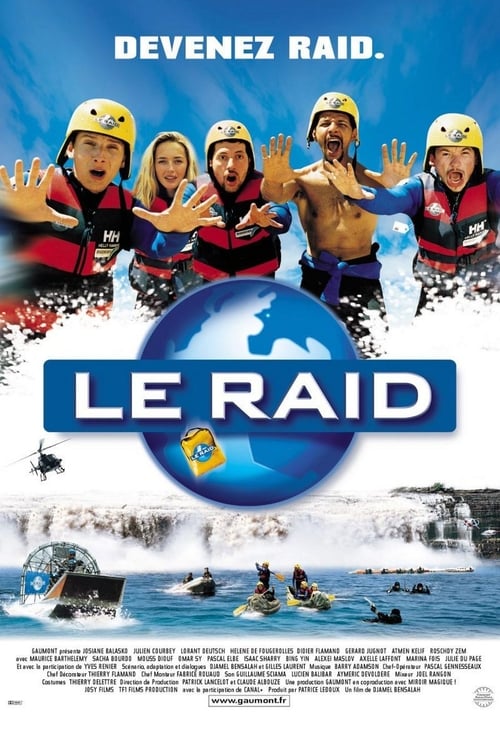
The Race
Plot
Sami, Tacchini, Yaya and Kader are four small-time crooks from the suburbs of Paris. After a failed robbery, their boss, Carlito, sends them to Canada to spy on his fiancée. There, they are mistaken for a band of professional killers and are hired to assassinate the heiress Léonore de Segonzac...
Get the Weekly Woke Watchlist
New and trending movies scored for woke bias, preachy messaging, and forced political themes — before you waste your evening.
No spam. One useful email per week.
Overall Series Review
Categorical Breakdown
The premise pits a group of small-time crooks from the "suburbs of Paris" against a wealthy heiress, Léonore de Segonzac, in Canada. This sets up a clear class and origin conflict, where the marginalized, diverse urban youth are contrasted with the established, privileged elite. The plot hinges on identity, as the protagonists' low-status background is initially misunderstood, leading to their miscasting as elite killers. The social positioning of the characters is central to the entire narrative.
The characters are failures in their home environment (the Paris suburbs) and flee France for Canada to continue their criminal activities. This suggests a low regard for French institutional life, framing the protagonists as operating outside the bounds of law and civic society. The plot contains no explicit vilification of Western history or ancestors, nor does it elevate a foreign culture as spiritually superior; it only depicts the home environment as a source of low-level criminality.
The male leads are introduced as "small-time crooks" who fail at their job and are then comically mistaken for superior professionals, establishing them as bumbling and incompetent. The women, an heiress and a fiancée, are functional to the plot as a target and a surveillance subject, but the primary comic focus is the emasculated, low-skill nature of the men. No information suggests a 'Girl Boss' or anti-natalism lecture.
The plot summary provides no presence of centering alternative sexualities, deconstructing the nuclear family, or engaging with gender ideology. The focus remains strictly on the crime-caper plot and the consequences of the mistaken identity.
As a crime-comedy, the narrative operates in a world of low-level moral relativism where the protagonists are thieves and potential assassins. This criminality implies a subjective morality driven by self-interest and survival. The film contains no explicit scenes, dialogue, or characters that demonstrate hostility toward religion, specifically Christianity, or that lecture on a spiritual vacuum.
Get the Weekly Woke Watchlist
New and trending movies scored for woke bias, preachy messaging, and forced political themes — before you waste your evening.
No spam. One useful email per week.