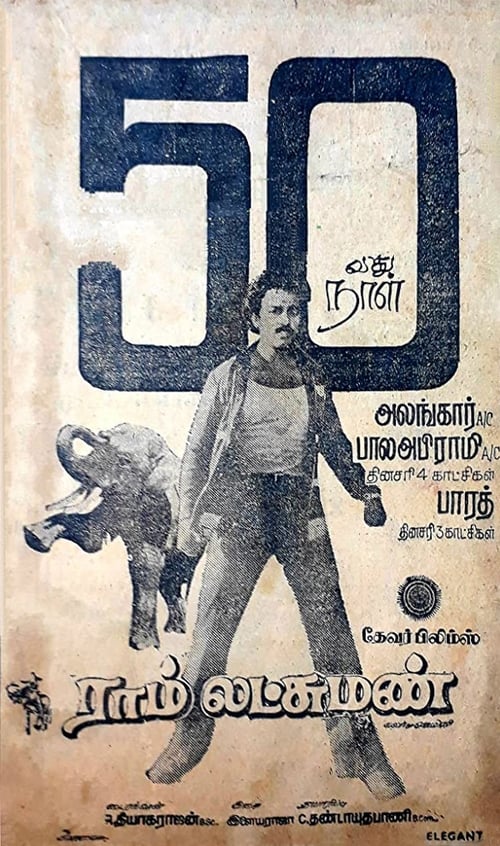
Ram Lakshman
Plot
Lakshman, an elephant, and Ram are inseparable friends. Ram even refuses to marry Meena when her father insists on getting rid of Lakshman. When Ram is accused of murder, Lakshman comes to his rescue.
Get the Weekly Woke Watchlist
New and trending movies scored for woke bias, preachy messaging, and forced political themes — before you waste your evening.
No spam. One useful email per week.
Overall Series Review
Categorical Breakdown
Characters are judged solely by their actions, like the villain's cunning plot and Ram's unwavering loyalty to his animal companion. The central conflict is an issue of individual injustice, not a lecture on systemic oppression or an intersectional hierarchy. The casting is regionally authentic to the Tamil film industry with no evidence of political 'race-swapping.'
The film utilizes local, Indian cultural settings and names that evoke the epic Ramayana, celebrating virtues like loyalty and devotion. The plot involves fighting a criminal within the local system, not framing the home culture or its ancestors as fundamentally corrupt. Institutions like friendship and justice are viewed as protective shields.
The core of the plot involves Ram choosing his elephant friend over a marriage conditional on abandoning his companion. The female lead, Meena, and the question of marriage are secondary to the primary theme of male/animal loyalty. No message is delivered that motherhood is a prison or that career is the only fulfillment. Masculinity is protective and centered on virtue, not depicted as toxic or bumbling.
The narrative follows a normative structure, centered on a traditional male-female pairing that is temporarily impeded, not deconstructed or redefined. The primary relationship is an interspecies bond of loyalty. The movie shows no presence of alternative sexual ideology, gender theory, or messages deconstructing the nuclear family as a societal flaw.
The film's title characters share names with figures from the Hindu epic Ramayana, suggesting an underlying moral framework of *dharma* or righteous action. The plot's resolution revolves around the triumph of truth and the proving of innocence, which confirms an objective moral law. Faith and higher moral principles are not targeted for vilification.
Get the Weekly Woke Watchlist
New and trending movies scored for woke bias, preachy messaging, and forced political themes — before you waste your evening.
No spam. One useful email per week.