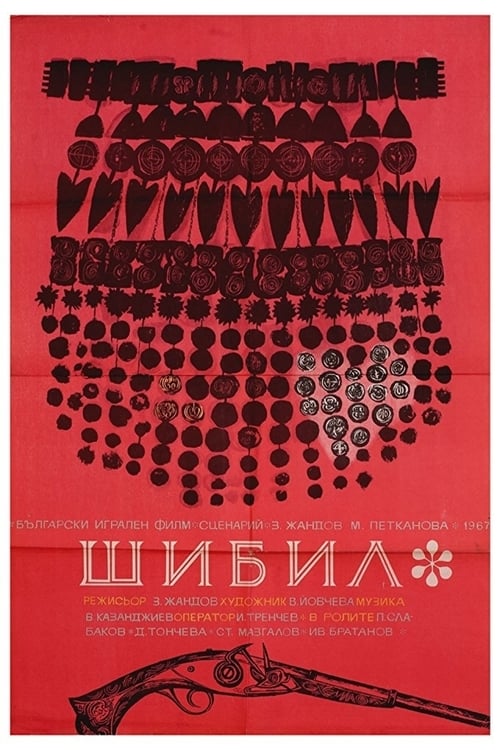
Shibil
Plot
A bandit chief falls in love with a wealthy man's daughter.
Get the Weekly Woke Watchlist
New and trending movies scored for woke bias, preachy messaging, and forced political themes — before you waste your evening.
No spam. One useful email per week.
Overall Series Review
Categorical Breakdown
The film's conflict is entirely based on character merit and social status—a bandit vs. a merchant family—not on race or intersectional hierarchy. The casting is historically authentic to its Bulgarian setting. The narrative judges characters by their actions and the content of their soul, aligning perfectly with the principle of universal meritocracy.
The movie is based on a foundational piece of Bulgarian literature and focuses on authentic descriptions of regional life and patriarchal customs. It respects the sacrifices and traditions of its ancestors. Institutions like the family and nation are the accepted framework against which the personal drama unfolds, showing deep cultural gratitude, not civilizational self-hatred.
Rada, the wealthy man's daughter, is a classic female archetype whose strength is derived from her spiritual power and unconditional love. Her willingness to run to the bandit, Shibil, in a moment of danger is explicitly likened to a mother's instinct to protect her child. This celebrates a complementary female role of protective love and emotional vitality, with no anti-natalist or 'Girl Boss' tropes present.
The entire film revolves around an intense, passionate, but traditionally structured male-female pairing. The story's focus is on heterosexual love and its redemptive power. No presence of sexual ideology, gender theory, or deconstruction of the nuclear family is evident in the plot or themes.
The core theme of the source material involves the bandit's redemption and finding 'peace in his soul for his past wrong doings' through love. This theme emphasizes a transcendent moral law and objective truth over subjective 'power dynamics.' Faith and spiritual wisdom are depicted as a source of strength and inner light, showing no hostility toward religion.
Get the Weekly Woke Watchlist
New and trending movies scored for woke bias, preachy messaging, and forced political themes — before you waste your evening.
No spam. One useful email per week.