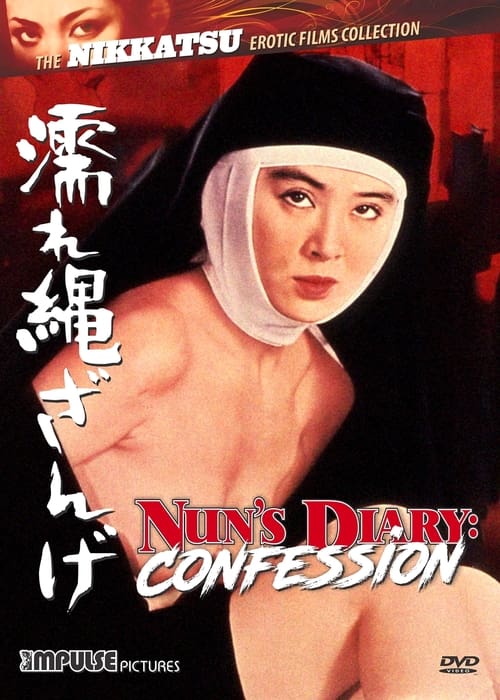
Nun's Diary: Confession
Plot
After being brutally raped on her honeymoon, a young woman attempts suicide. A nearby priest talks her out of it and she decides to become a nun. But once inside she finds that this house of God is a den of debauchery and depravity.
Get the Weekly Woke Watchlist
New and trending movies scored for woke bias, preachy messaging, and forced political themes — before you waste your evening.
No spam. One useful email per week.
Overall Series Review
Categorical Breakdown
The film does not focus on race, intersectionality, or the vilification of whiteness; the cast is Japanese, and the conflict is entirely personal and institutional. Character merit is irrelevant as the plot is one of ceaseless victimhood and exploitation, not a lecture on privilege.
The film attacks a core Western institution (Catholicism) by depicting its sacred space as corrupt, but the focus is on sexploitation and not a broad critique of 'Western civilization' or 'ancestors.' The narrative is not concerned with civilizational self-hatred, but with exposing institutional hypocrisy.
The female leads are not 'Girl Boss' figures; the main character is a continual victim, and the other women are her abusers, which shows female characters as depraved rather than perfect. The female-only convent is depicted as a prison of vice, which subverts any message of female solidarity, yet it also completely ignores concepts of complementarianism or the celebration of motherhood.
The narrative intensely focuses on the alternative sexualities practiced by the nuns within the convent, making non-traditional sexual identity the central characteristic of the antagonists. The deconstruction of the religious structure directly involves the centering of lesbianism and sadomasochism in a transgressive context.
The entire premise is an overt, uncompromising attack on traditional religion, specifically Catholicism. The convent, the physical representation of the 'house of God,' is shown to be a source of evil, abuse, and depravity, framing Christian-based traditional religion as the root of oppression and vice.
Get the Weekly Woke Watchlist
New and trending movies scored for woke bias, preachy messaging, and forced political themes — before you waste your evening.
No spam. One useful email per week.