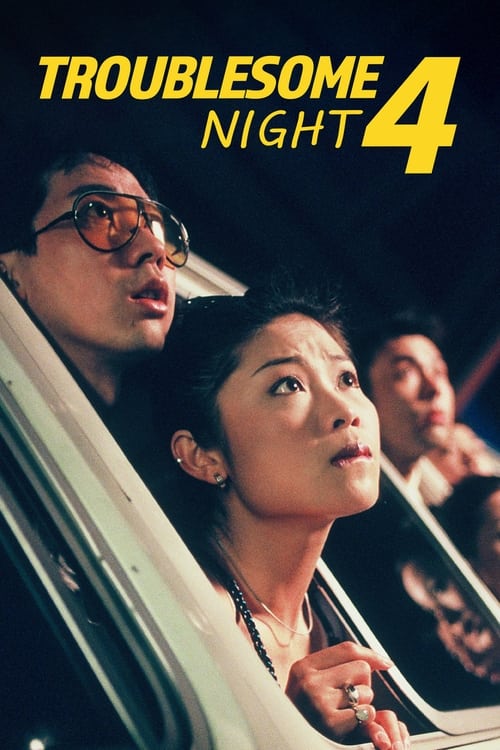
Troublesome Night 4
Plot
A group of tourists from Hong Kong visit the Philippines on holiday and run into ghosts.
Get the Weekly Woke Watchlist
New and trending movies scored for woke bias, preachy messaging, and forced political themes — before you waste your evening.
No spam. One useful email per week.
Overall Series Review
Categorical Breakdown
The film does not focus on 'whiteness' or Western privilege. It features an inter-Asian dynamic where Hong Kong tourists are the outsiders, and the Filipino environment and ghosts are the antagonistic force. The Hong Kong men are depicted as 'bad-boys' and lecherous, and they are punished for trying to 'take advantage of the city's ladies of the night,' which introduces a dynamic of moral judgment against tourist exploitation. This is a critique of behavior, not a lecture on systemic, immutable characteristics or intersectional hierarchy in the modern sense.
The film's premise involves Hong Kong tourists encountering danger outside the 'safe confines' of their home, which is a common trope in the series. The culture being demonized is the foreign locale (the Philippines) as a source of danger and ghosts, not the home culture or its ancestors. Institutions like the nuclear family, though challenged by infidelity, are treated as the normative structure.
The gender dynamic involves men being depicted as morally flawed and lecherous, with the male characters explicitly punished and judged by ghosts/zombies for their 'wicked whoring.' This places a female moral and supernatural authority over the men. However, the female characters who are ghosts or exotic dancers are also highly sexualized, and the conflict in the newlywed story is a traditional domestic dispute over infidelity. It lacks the modern 'Girl Boss' trope or explicit anti-natalist messaging.
The entire sexual dynamic of the movie is focused on traditional heterosexual pairings, infidelity, and the pursuit of prostitutes. The conflict revolves around marriage and heterosexual lust. There is no presence of alternative sexual ideologies, deconstruction of the nuclear family through a queer theory lens, or focus on gender ideology.
The film is a supernatural horror-comedy that completely affirms the existence of a spiritual, transcendent world (ghosts, demons, spirits) that actively enforces moral law by punishing the wicked and the lecherous. This directly supports the idea of an objective consequence for immoral actions. The film's light satire is directed at Chinese *superstition* and fortune-telling, not a fundamental hostility toward faith or a transcendent moral law.
Get the Weekly Woke Watchlist
New and trending movies scored for woke bias, preachy messaging, and forced political themes — before you waste your evening.
No spam. One useful email per week.