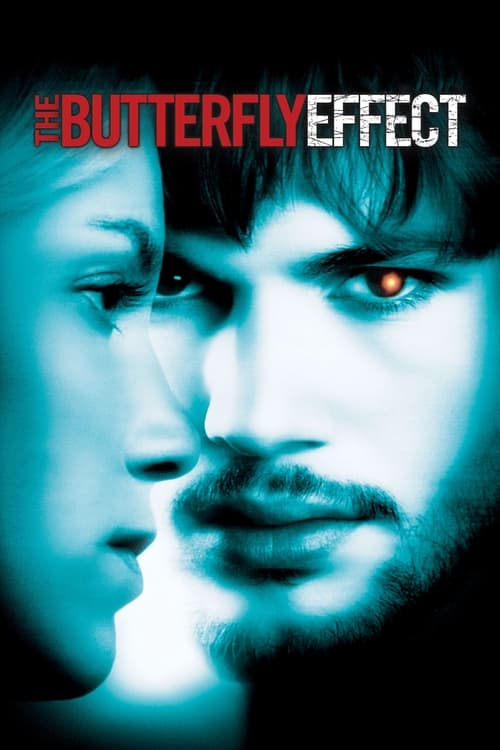
The Butterfly Effect
Plot
A young man struggles to access sublimated childhood memories. He finds a technique that allows him to travel back into the past, to occupy his childhood body and change history. However, he soon finds that every change he makes has unexpected consequences.
Get the Weekly Woke Watchlist
New and trending movies scored for woke bias, preachy messaging, and forced political themes — before you waste your evening.
No spam. One useful email per week.
Overall Series Review
Categorical Breakdown
The narrative's central conflict is psychological and personal, revolving around four Caucasian childhood friends and their individual traumas. Character merit or downfall is based entirely on their specific actions and the consequences of time travel, not on race, immutable characteristics, or a systemic hierarchy. There is no vilification of 'whiteness' or forced insertion of diversity; the main cast reflects a common, colorblind casting of the era.
The film does not attack Western civilization, heritage, or national institutions. The hostility is directed only at a single, extremely dysfunctional and abusive family unit, which is portrayed as a source of personal chaos and trauma. The plot seeks to resolve a localized, intimate tragedy, not to deconstruct society or frame home culture as fundamentally corrupt.
The female lead is repeatedly placed in a role of victimhood due to the abuse she suffers, a core part of the plot that the protagonist attempts to fix in every timeline. She is not presented as an instantly perfect 'Girl Boss' or a 'Mary Sue.' The male lead is driven by protective instincts for his friends and not depicted as a bumbling idiot, but he fails repeatedly to achieve a happy outcome. The story's focus is on trauma and consequence, with no explicit anti-natalist or anti-family messaging beyond the focus on a profoundly broken family unit.
The movie contains no centering of alternative sexualities, and gender ideology is completely absent from the narrative. The sexual relationships shown are exclusively heterosexual, and the nuclear family is challenged only by the actions of an abusive individual, not by a political critique of the institution itself. Sexuality is treated as a private matter or, in some timelines, an element of trauma.
The film's primary framework is scientific determinism and chaos theory, not a religious one. Morality is strongly subjective, as the protagonist's attempts to do good inevitably lead to evil or greater suffering in other timelines, aligning with moral relativism. While the film is dark and contains profane language sometimes associated with a 'Bible-believing Christian' character, which may offend some religious viewers, the plot itself does not frame religion, specifically Christianity, as the root of evil or use it as a villainous force.
Get the Weekly Woke Watchlist
New and trending movies scored for woke bias, preachy messaging, and forced political themes — before you waste your evening.
No spam. One useful email per week.