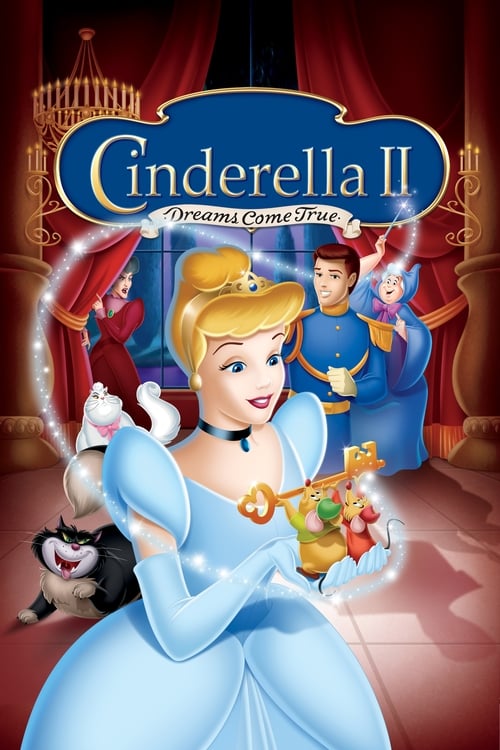
Cinderella II: Dreams Come True
Plot
As a newly crowned princess, Cinderella quickly learns that life at the Palace - and her royal responsibilities - are more challenging than she had imagined. In three heartwarming tales, Cinderella calls on her animal friends and her Fairy Godmother to help as she brings her own grace and charm to her regal role and discovers that being true to yourself is the best way to make your dreams come true.
Get the Weekly Woke Watchlist
New and trending movies scored for woke bias, preachy messaging, and forced political themes — before you waste your evening.
No spam. One useful email per week.
Overall Series Review
Categorical Breakdown
Characters are judged by their internal character, such as Cinderella's kindness and the baker's humility, which contrasts with the superficial status of the aristocracy. The central critique is of class snobbery and rigid etiquette, not an intersectional hierarchy of race or immutable characteristics.
The narrative challenges the stifling 'old traditions' of the palace, represented by the royal advisor Prudence, suggesting they need reform. However, the Western institution of the monarchy itself is preserved and ultimately improved by Cinderella's grace and personal touch, rather than being demonized or framed as fundamentally corrupt.
Cinderella's primary story is about her struggle to manage royal duties and assert her own style of leadership, a form of the 'Girl Boss' trope where she succeeds by relying on her own judgment over male authority or tradition. Prince Charming is mostly absent during this personal test of agency, though the film ends with the couple and their domestic life intact.
The narrative focuses entirely on normative male-female pairings and traditional family structures. A segment where a male mouse wishes to be human explicitly resolves with the lesson that one must accept their inherent, biological nature, making the content align with a normative structure.
The movie utilizes the Fairy Godmother's magic as a benign force that helps good characters. The plot themes consistently advocate for an objective moral truth—being true to one's self—and do not contain any criticism or vilification of traditional religion.
Get the Weekly Woke Watchlist
New and trending movies scored for woke bias, preachy messaging, and forced political themes — before you waste your evening.
No spam. One useful email per week.