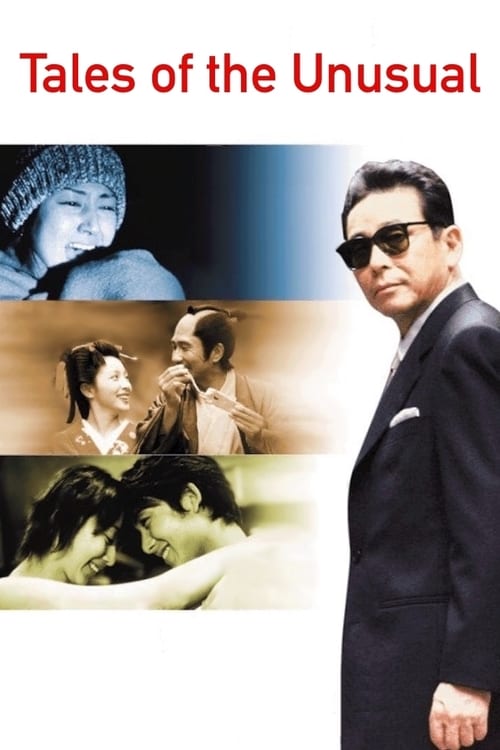
Tales of the Unusual
Plot
A four-part anthology in the spirit of The Twilight Zone, this film starts off with a group of commuters stranded at a train station in the rain, listening to stories told by one of the group. These include tales of a group stranded in the mountains and haunted by guilt over a death they inadvertantly caused, an emotionally broken chessmaster pressed into playing a real-life game for an eccentric millionaire, a wandering medieval samurai who finds a modern-day cell phone on the ground and a person on the other end asking questions about the past, and a young couple who agree to try a computer simulation of what their future as husband and wife would be like.
Get the Weekly Woke Watchlist
New and trending movies scored for woke bias, preachy messaging, and forced political themes — before you waste your evening.
No spam. One useful email per week.
Overall Series Review
Categorical Breakdown
The film is a Japanese production from 2000 and is not concerned with 'whiteness' or Western intersectional hierarchy. Character conflict and narrative outcomes are based on individual actions, moral failings, and personal obsessions (e.g., the chessmaster's breakdown) which are universal and merit-based, not on immutable characteristics or a lecture on systemic oppression.
The content is set entirely within a Japanese cultural context. The 'Samurai Cellular' segment provides a comedic, mild demythologization of a historical hero figure by portraying him as cowardly, but the segment ultimately pushes him toward accepting his destiny and becoming the hero, which is a celebration of national tradition, not civilizational self-hatred. Other segments critique modern human nature or technology, not the foundations of society.
Gender roles are traditional for the time and culture, focusing on male-female dynamics. The 'Marriage Simulator' segment explores the challenges of a traditional heterosexual relationship without denigrating the institution. The female lead in 'One Snowy Night' is a vulnerable figure whose death drives the horror, not a 'Girl Boss' or 'Mary Sue' trope. Masculinity is not systematically emasculated; males are depicted as competent, flawed, or morally conflicted.
The narrative does not include, center, or lecture on alternative sexualities, sexual ideology, or gender theory. The focus in the only relationship-centric story ('The Marriage Simulator') is explicitly on a traditional male-female engaged couple, affirming the normative structure.
The stories are rooted in the supernatural, ghost stories, and existential dilemmas, which often touch upon concepts of fate, guilt, and moral consequence, implying a transcendent moral law rather than rejecting one. The film does not target or vilify traditional religion, especially not Christianity, which is culturally irrelevant to the setting. Moral relativism is only a part of the dramatic scenario in a way common to anthology twists, not a central philosophical lecture.
Get the Weekly Woke Watchlist
New and trending movies scored for woke bias, preachy messaging, and forced political themes — before you waste your evening.
No spam. One useful email per week.