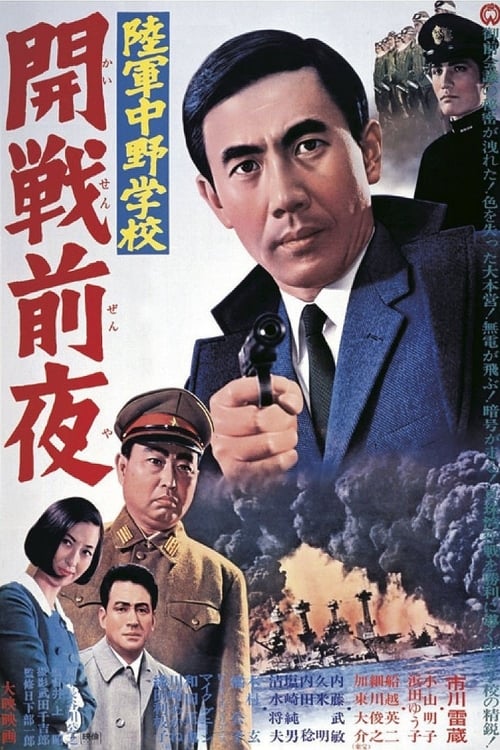
The Night before Pearl Harbor
Plot
The last film in the series brings the tale to the doorstep of Pacific War, with the planning of the bombing of Pearl Harbor dominant in Nakano Spy School.
Get the Weekly Woke Watchlist
New and trending movies scored for woke bias, preachy messaging, and forced political themes — before you waste your evening.
No spam. One useful email per week.
Overall Series Review
Categorical Breakdown
The film is a Japanese-made historical war drama with an authentically Japanese cast, portraying an actual Japanese military unit. Character merit in the field of espionage dictates success and failure. The conflict is purely national and military (Japan versus Allied forces). The narrative does not utilize race as a means of internal power critique or rely on an intersectional hierarchy.
The central theme is a critique and deconstruction of the Imperial Japanese Army’s militaristic system, which is shown to strip men of their humanity and personal lives. This constitutes a severe internal critique of a specific, defunct national institution and its 'romantic idealism.' However, this critique is not framed as a generalized hostility toward all Japanese heritage or culture, nor does it elevate foreign cultures as spiritually superior; it focuses on the tragedy of the Japanese people during the war era.
Female characters, such as a nurse and a geisha, occupy traditional roles or are secondary to the male protagonists. The emotional tragedy of the story centers on the destruction of the traditional family unit (specifically the male lead's relationship with his fiancée) by the demands of military duty and the state. There is no presence of the 'Girl Boss' trope, the emasculation of men, or explicit anti-natalist messaging.
The narrative adheres to a normative structure, with the main emotional conflict stemming from the forced separation of the heterosexual male protagonist from his fiancée. There is no presence of alternative sexualities, deconstruction of the nuclear family beyond its destruction by war, or any form of gender ideology lecturing, consistent with its 1968 genre and setting.
The film explores a moral vacuum by questioning if morality has a place in wartime and showing the loss of a 'sense of humanity' under state ideology. This moral quandary is secular, focusing on duty versus personal ethics. It is a sober search for objective truth in a military context but contains no direct hostility, vilification, or mockery toward traditional religion, specifically Christianity.
Get the Weekly Woke Watchlist
New and trending movies scored for woke bias, preachy messaging, and forced political themes — before you waste your evening.
No spam. One useful email per week.