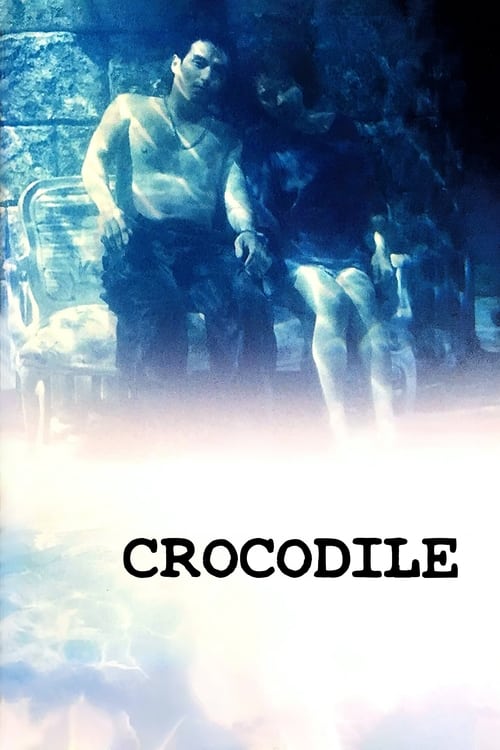
Crocodile
Plot
Under the Han River lives Crocodile, a rugged member of the lumpenproletariat who exists from schemes and stealing. His position as a scavenger of society undermines South Korea’s boasts of its newfound economic position as an Asian Tiger. One day, Crocodile finds a girl floating in his river.
Get the Weekly Woke Watchlist
New and trending movies scored for woke bias, preachy messaging, and forced political themes — before you waste your evening.
No spam. One useful email per week.
Overall Series Review
Categorical Breakdown
The narrative’s core conflict is not based on race, gender, or intersectional hierarchy, but entirely on socio-economic class, pitting the lumpenproletariat against the corrupt and affluent mainstream society. Characters are judged by their actions and status as outcasts, not by immutable characteristics. The film features no race-swapping or vilification of whiteness, as all primary characters are of the same ethnicity.
The film demonstrates hostility toward the industrial and modern capitalist project of the 'Asian Tiger' economy, framing the process of modernization and industrialization as discarding the main characters. The critique targets the systemic corruption and materialism of the modern state, not the deconstruction of fundamental Korean culture, heritage, or ancestors. The small 'family' unit of outcasts is a protective institution against the chaos of the city, not a subject of contempt.
The main female character is instantly relegated to the role of an abused victim and sex slave by the male protagonist, the exact opposite of a 'Girl Boss' or 'Mary Sue' trope. However, the male lead is an extremely violent, misogynistic, and morally toxic figure whose hatred of self is expressed through violence toward women. This extreme portrayal of a destructive male aligns with the 'Men are... toxic' criterion, though the film lacks the explicit female empowerment found in Woke narratives.
The narrative focuses exclusively on a highly dysfunctional and brutal traditional male-female pairing. There are no elements related to alternative sexualities, queer theory, gender ideology, or the deconstruction of the nuclear family. Sexuality remains a private, though violently expressed, dynamic between the two main characters.
The film operates in an existential and moral vacuum, focusing on themes of death, suicide, and human depravity. It does not contain any direct hostility toward traditional religion, especially Christianity, nor does it feature religious characters as villains or bigots. The moral subjectivity is a product of the characters' desperate environment and self-loathing, rather than a philosophical lecture on 'power dynamics' replacing an objective truth.
Get the Weekly Woke Watchlist
New and trending movies scored for woke bias, preachy messaging, and forced political themes — before you waste your evening.
No spam. One useful email per week.