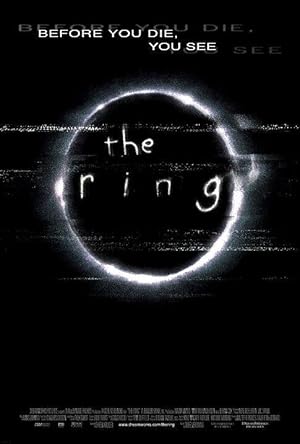
The Ring
Plot
Rachel Keller is a journalist investigating a videotape that may have killed four teenagers (including her niece). There is an urban legend about this tape: the viewer will die seven days after watching it. If the legend is correct, Rachel will have to run against time to save her son's and her own life.
Get the Weekly Woke Watchlist
New and trending movies scored for woke bias, preachy messaging, and forced political themes — before you waste your evening.
No spam. One useful email per week.
Overall Series Review
Categorical Breakdown
The casting is colorblind, and the film is a mystery/horror story focused on a supernatural curse. The plot does not rely on race, immutable characteristics, or intersectional hierarchy. Character value and conflict are based purely on individual actions, professional merit as journalists, and their roles as parents dealing with an imminent threat.
The central critique is aimed at modern mass media and technology's isolating effects, not Western civilization itself. The narrative is a quest to save the American home and family unit from an external, supernatural threat that manifests through technology. There is no demonization of Western ancestors or framing of the home culture as fundamentally corrupt.
The female protagonist, Rachel, is a strong, competent investigative journalist and the sole figure capable of solving the mystery and protecting her son. Her ex-husband and co-parent, Noah, is depicted as a neglectful and largely ineffective father figure who ultimately fails to survive the curse. This dynamic elevates the woman into the hero role while presenting the primary male character as flawed and dependent on her initiative, placing it above a 1/10 score. However, Rachel's ultimate motivation is protective motherhood, which is framed as a source of strength, not a 'prison.'
The movie follows a traditional family structure dynamic—a divorced mother, father, and son—who are drawn together by the crisis. The narrative is devoid of any explicit sexual ideology, centering of alternative sexualities, or deconstruction of the nuclear family as an ideological goal. Sexuality is not a theme.
The core conflict is a supernatural curse delivered by a ghostly child, not a critique of organized religion. The film contains no Christian or religious characters who are vilified or presented as bigots. The morality of the story is based on the objective truth of a child's tragic death and the desperate need to break the curse, which acts as a higher, transcendent moral law governing the spiritual vacuum left by technology and neglect.
Get the Weekly Woke Watchlist
New and trending movies scored for woke bias, preachy messaging, and forced political themes — before you waste your evening.
No spam. One useful email per week.