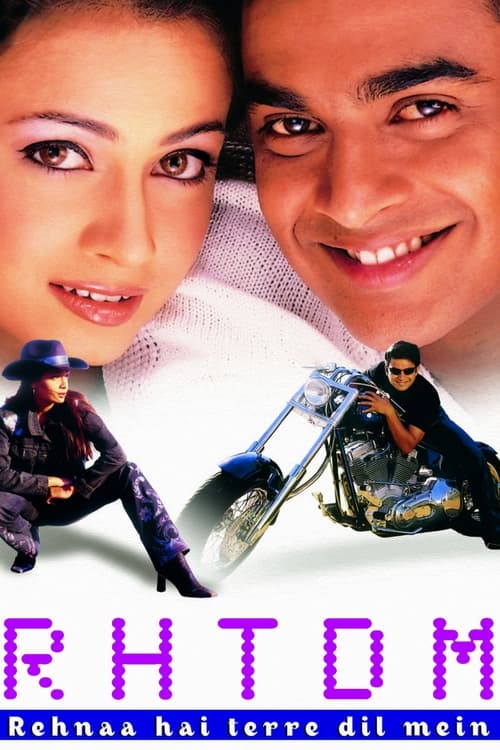
Rehnaa Hai Terre Dil Mein
Plot
Maddy impersonates Rajeev, the person his love interest, Reena, is about to marry and attempts to woo her. However, he is unprepared for the moment when the truth will be revealed.
Get the Weekly Woke Watchlist
New and trending movies scored for woke bias, preachy messaging, and forced political themes — before you waste your evening.
No spam. One useful email per week.
Overall Series Review
Categorical Breakdown
The core cast and the conflict involve three Indian characters of similar background, making it an internal cultural story. The narrative judges characters based on merit, passion, and deception (Maddy is a flawed rogue, Rajeev is a seemingly perfect NRI), not immutable characteristics. There is no vilification of 'whiteness' or forced insertion of diversity, resulting in a universal meritocracy focus.
The film is an Indian production set in India and focused on internal Indian social dynamics. There is no hostility toward Western civilization or one's own ancestors. The antagonist, Rajeev, is an NRI (Non-Resident Indian) who is successful abroad, but the film ultimately favors the passionate local Indian protagonist, Maddy, which is the inverse of civilizational self-hatred toward the local culture.
The female lead, Reena, is defined by her choice of partner, which is the antithesis of the 'Girl Boss' trope. The plot structure centers on traditional courtship and marriage, not anti-natalism. The main male character is not emasculated but rather exhibits aggressive, 'bad boy' masculinity that modern critics label as 'toxic' and romanticizing stalking. This content is anti-feminist by today's 'woke' standard but does not contain the specified 'woke' tropes.
The narrative operates entirely within the normative structure of a male-female pairing. The plot revolves around a man pursuing a woman to marry her. There is no presence of alternative sexualities, deconstructing the nuclear family, or lecturing on gender theory. Sexuality remains a private matter focused on heterosexual marriage.
The film is a romantic drama with no overt philosophical or political agenda. It is set in a culturally traditional Indian context, with the story leading toward marriage, which is generally affirming of social institutions. There is no hostility toward religion or promotion of moral relativism; the moral framework is a traditional one where deception is a major sin.
Get the Weekly Woke Watchlist
New and trending movies scored for woke bias, preachy messaging, and forced political themes — before you waste your evening.
No spam. One useful email per week.