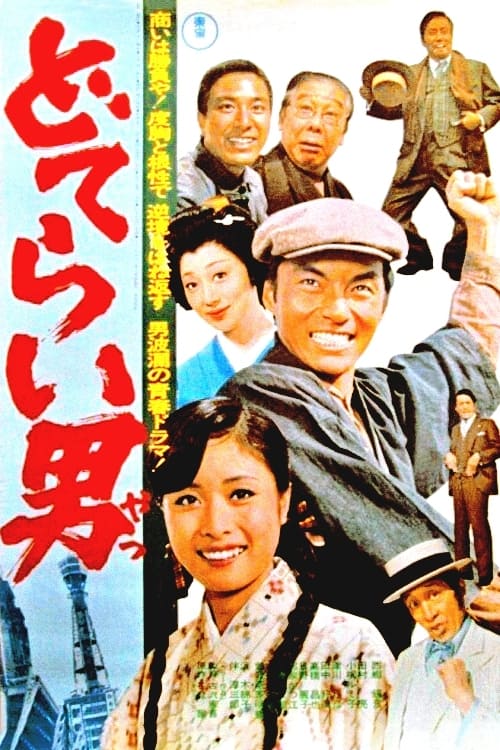
Doterai Man
Plot
Business is a game! A theatrical version of the TV drama that became a social phenomenon starring Teruhiko Saigo. Set in a wholesaler town in Osaka, it depicts the activities of the main character Takezo Yamashita who repels adversity with a man's stubbornness and guts.
Get the Weekly Woke Watchlist
New and trending movies scored for woke bias, preachy messaging, and forced political themes — before you waste your evening.
No spam. One useful email per week.
Overall Series Review
Categorical Breakdown
The narrative is a pure meritocracy story, focusing on the class struggle between a poor country boy and the established urban business elite, with all characters being Japanese. Advancement is based solely on sales skill, ambition, and work ethic. No race, intersectionality, or 'whiteness' is vilified or discussed. The conflict is based on character merit and individual effort.
The film is a cultural celebration of a key Japanese institution: the post-war 'rise to success' business story. The plot is a tribute to the city of Osaka and the traditional *detchi* (apprentice) system, modeled after the founder of a real company. Institutions like family and the nation's business spirit are presented as the foundation for the protagonist's success, which is the definition of cultural gratitude.
The core theme is a 'man's stubbornness and guts.' The primary struggle is masculine—a man's ambition in the business world. The main female character, Yayoi, is a sympathetic and supportive figure who teaches the protagonist English and attempts to save the business. Her main plot role is as an aspiration, with the protagonist working hard to earn the right to prevent her forced marriage to the villain. The gender roles are distinct and complementary.
The narrative is focused entirely on business rivalry, ambition, and a traditional love interest/marriage plot line. There is no presence of alternative sexualities, deconstruction of the nuclear family, or gender ideology, as this was not a theme in 1970s Japanese popular drama.
The story is a secular celebration of ambition and the material success of the working man. While it does not explicitly feature or celebrate faith, it is focused on an Objective Truth: the value of hard work, integrity in business, and traditional moral law. It does not contain any hostility toward religion or promote moral relativism; the morality is simply the objective work ethic of the successful businessman.
Get the Weekly Woke Watchlist
New and trending movies scored for woke bias, preachy messaging, and forced political themes — before you waste your evening.
No spam. One useful email per week.