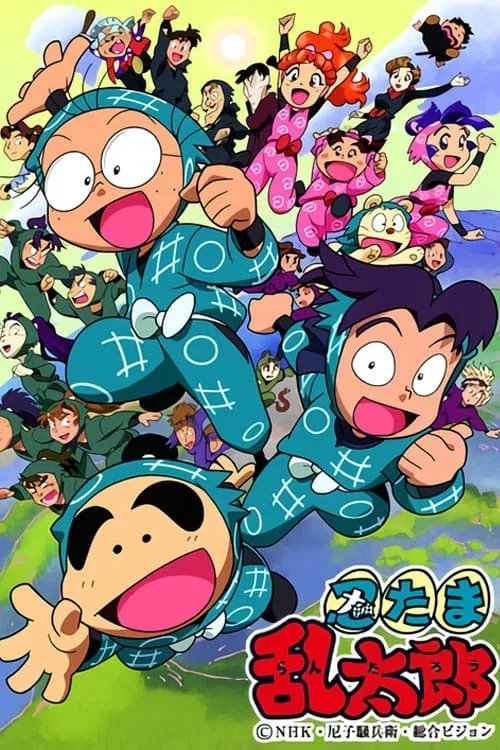
Ninja Boy Rantaro
Season 1 Analysis
Season Overview
No specific overview for this season.
Season Review
Categorical Breakdown
The narrative operates entirely within a historically and culturally homogeneous setting (Sengoku-era Japan), eliminating the possibility of Western-style race-based 'intersectionality,' 'vilification of whiteness,' or 'race-swapping.' The boys are judged by their competence (or comical lack thereof) in ninja skills, embodying Universal Meritocracy. The character backgrounds reflect class/economic differences (low-ranking family, orphan, rich merchant's son), but this is used to develop individual character traits, not to lecture on systemic oppression.
The series is a historical parody and gag anime that draws on traditional Japanese folklore and ninja lore. The tone is consistently 'bright, fun, and lively' school life, framed by the culture it portrays. The setting respects the aesthetic and historical foundation of the ninja academy and its place within the national history, using it as a backdrop for comedy rather than a tool for civilizational self-hatred or deconstruction of Japanese heritage.
Men and women are generally depicted in distinct but complementary roles, as seen with the separate 'Ninjaboy' and 'Kunoichi' (female ninja) classes. The main trio of boys is consistently shown as bumbling and failing, which is used for comical effect rather than a statement on masculine toxicity. No major female 'Girl Boss' character is instantly perfect or overshadows the male leads as a vehicle for feminist lecturing. The male teacher's use of female disguise is a cross-dressing comedy trope common in older media, not a serious anti-natalist or anti-family message.
The core structure is normative, focusing on young boys in a traditional learning environment, with the nuclear family implicitly being the standard. The only element that moves the score from a perfect '1' is the recurring gag involving the teacher Yamada-sensei, who frequently disguises himself as a woman named 'Denko' for comedic purposes, with his personality changing. This is treated as a slapstick comedic device rather than an ideological exploration or promotion of modern gender theory to children.
As a gag comedy set in historical Japan, the series contains no identifiable religious themes, and certainly no hostility toward Christianity or traditional faith systems. Morality is implicitly Transcendent, built on universal themes of friendship, perseverance, and teamwork—objective virtues for a children's show. There is no deconstruction of moral standards into subjective 'power dynamics.'