Shark Tale
Plot
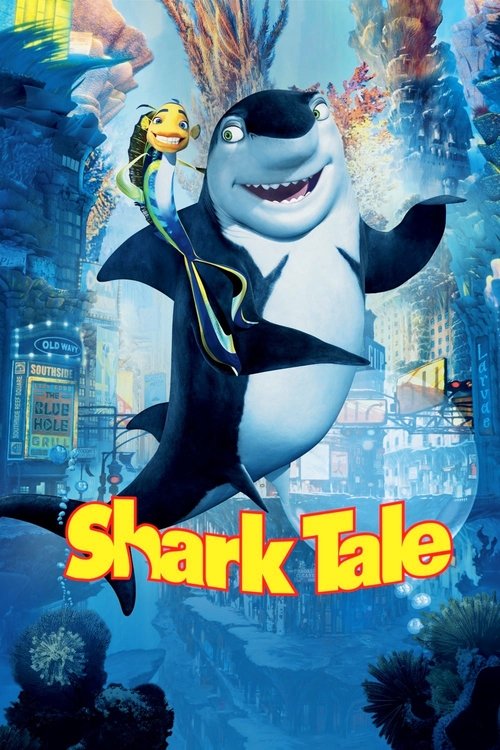
Oscar is a small fish whose big aspirations often get him into trouble. Meanwhile, Lenny is a great white shark with a surprising secret that no sea creature would guess: He's a vegetarian. When a lie turns Oscar into an improbable hero and Lenny becomes an outcast, the two form an unlikely friendship.
Get the Weekly Woke Watchlist
New and trending movies scored for woke bias, preachy messaging, and forced political themes — before you waste your evening.
No spam. One useful email per week.
Overall Series Review
Categorical Breakdown
The narrative relies heavily on coded ethnic and class stereotypes. The main protagonist, Oscar, is coded as an urban, working-class male, striving to 'move on up' from his humble beginnings in the 'inner city' slums of the reef. The primary antagonists are sharks who are a clear, negative parody of the Italian-American Mafia, complete with Italian-coded names and accents, and voiced by actors famous for mob roles. Advocacy groups protested the film for perpetuating negative ethnic stereotypes in its depiction of the 'white' villains. While the plot condemns Oscar's greed and lies, the social hierarchy is framed with the 'little guy' versus the 'big fish' crime boss, which employs a clear intersectional lens based on ethnic and class coding.
Hostility is directed at a particular traditional institution: the patriarchal shark family, which is a parody of the Italian-American crime family. This institution is portrayed as violently committed to a destructive, non-conforming tradition (eating other fish) and hostile toward its own son's desire for a different life. The traditional 'old ways' of the shark ancestors (predation) are definitively rejected and reformed by the end, moving the plot toward deconstruction of this heritage. The greater 'home culture' of the reef itself is shown to be materialistic and class-stratified but is not condemned as fundamentally evil.
The female characters operate within a traditional dichotomy. Angie, the supportive, non-glamorous best friend, represents genuine love and moral conscience, who is ultimately chosen by the male lead. Lola, the glamorous lionfish, functions as the ‘heartless Gold Digger’ temptress, who is rejected by the protagonist for his moral redemption. The primary female arc revolves around her relationship with Oscar. There are no 'Girl Boss' tropes, and masculinity is not generally emasculated, though the shark father's toxic-masculine expectations are reformed to accept his non-conforming son.
Lenny, the great white shark, struggles to be accepted by his traditional, hyper-masculine father, Don Lino, because he is a vegetarian and refuses to partake in the shark's carnivorous nature. Critics and cultural commentary widely interpreted Lenny's vegetarianism, his 'flamboyant' presentation while in disguise, and his father's deep shame and rejection as a clear allegory for coming out or self-acceptance of homosexuality in a homophobic, traditional environment. The entire subplot is structured around the theme of tolerance and accepting a loved one's non-conforming identity, which scores high on the queer theory lens.
The film’s central moral message is strongly secular: lying is wrong, and honesty and true friendship are what matter. Oscar's journey ends with him learning the objective moral truth that lies and superficiality lead to misery, while honesty and love lead to happiness. There is no explicit reference to or hostility toward any traditional religion. The morality is transcendent in the sense that it relies on objective truth (honesty over deceit) but is presented without any spiritual or religious context.
Get the Weekly Woke Watchlist
New and trending movies scored for woke bias, preachy messaging, and forced political themes — before you waste your evening.
No spam. One useful email per week.