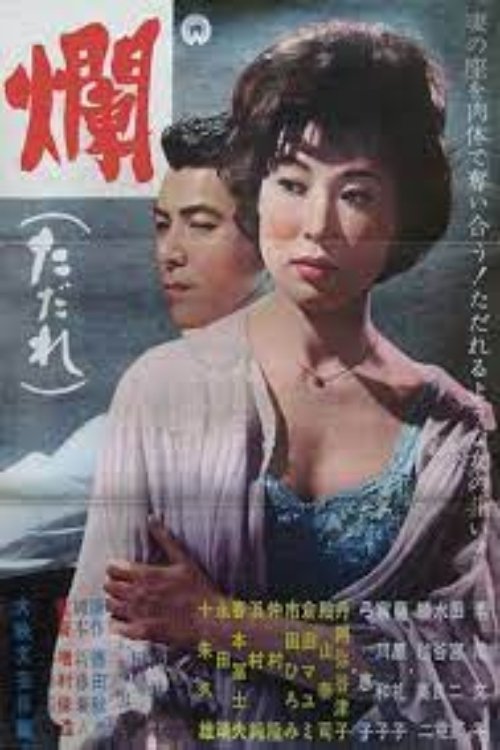
Stolen Pleasure
Plot
High-end cabaret hostess Masuko discovers her long-term lover is actually married. Determined to secure her future, she aggressively manipulates him into divorcing his wife, only for their new marriage to be destabilized by the arrival of her young niece.
Get the Weekly Woke Watchlist
New and trending movies scored for woke bias, preachy messaging, and forced political themes — before you waste your evening.
No spam. One useful email per week.
Overall Series Review
Categorical Breakdown
The film is a Japanese production, and the narrative focuses entirely on the interpersonal drama, class differences, and moral failings of the Japanese characters. The plot does not engage with race, immutable characteristics, or intersectional hierarchy as a political lens. Casting is racially authentic to the setting and the character's merit (or lack thereof) is the sole driver of the plot.
The film is a Japanese drama set in a modern Japanese urban environment and critiques local social and sexual morality. It does not contain any hostility toward Western civilization, demonization of Western ancestors, or the framing of Western culture as fundamentally corrupt. The focus is an internal critique of human nature and transactional relationships within a Japanese context.
Masuko, the female lead, is a powerful, highly ambitious, and proactive character who manipulates a man into a divorce and marriage to secure her future. The male character, Asai, is portrayed as weak, easily controlled, and morally compromised, becoming predatory toward the niece-in-law. The female lead is not a perfect Mary Sue, as her ambition leads to a destructive cycle, but the narrative strongly depicts the emasculation and moral failure of the male lead. The drive for motherhood through fertility treatment is shown as a strategic move to secure the wife's position, indicating a transactional view of the family institution.
The narrative's entire focus is on heterosexual infidelity, marriage, and the jealousy surrounding traditional family structures. There is no presence of alternative sexualities, deconstruction of the nuclear family as a political concept, or any lecturing on gender theory. The conflict is a purely normative drama.
The film is a secular drama about passion, ambition, and moral corruption in a modern setting. The plot contains no direct or indirect hostility toward religion, especially Christianity. Morality is shown as an objective struggle for personal gain versus conscience, but it is not framed in terms of subjective 'power dynamics' or a direct attack on faith as the root of evil.
Get the Weekly Woke Watchlist
New and trending movies scored for woke bias, preachy messaging, and forced political themes — before you waste your evening.
No spam. One useful email per week.