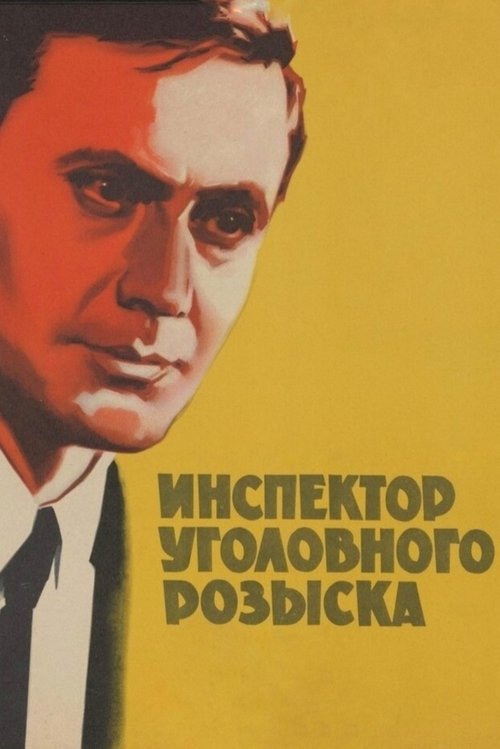
Inspector of Criminal Investigation
Plot
A detective investigating the robbery also tries to help young man to avoid criminal future.
Get the Weekly Woke Watchlist
New and trending movies scored for woke bias, preachy messaging, and forced political themes — before you waste your evening.
No spam. One useful email per week.
Overall Series Review
Categorical Breakdown
The film’s central conflict focuses on the protagonist's moral intervention to bring a misguided youth back into adherence with state law and social good. Character value is defined by service to society and adherence to a collective moral code. Casting is homogenous, and the narrative does not reference immutable characteristics, race, or intersectional hierarchy as factors in the plot or character development.
The detective genre in Soviet cinema exists to defend the institutions of the state and the socialist collective from internal chaos. The state law and the law enforcement apparatus are portrayed as fundamentally necessary and morally righteous shields against criminality. The narrative promotes gratitude for the national/socialist system and celebrates its protective role.
The protagonist is a male Inspector, serving as the protective and morally resolute authority figure. Female characters occupy traditional or supportive roles, and the narrative contains no elements of the 'Girl Boss' trope, the emasculation of males, or anti-natalist messaging. The social structure presented is normative, where complementary roles are assumed.
Alternative sexualities and gender ideology are entirely absent from the film. The focus on the traditional family unit and the normative social structure aligns with the state-mandated moral standards of the period. The film contains no elements of the queer theory lens or any attempt to deconstruct the nuclear family.
While the film is a product of an officially atheist, materialist state, the morality it advocates is an objective, transcendent moral law enforced by the collective and the state’s justice system. The film rejects moral subjectivity and power dynamics, instead asserting that a fixed, knowable, and absolute truth (Socialist law) exists and must be followed. The narrative's focus on an objective higher law places it far from the moral relativism defined as a high score.
Get the Weekly Woke Watchlist
New and trending movies scored for woke bias, preachy messaging, and forced political themes — before you waste your evening.
No spam. One useful email per week.