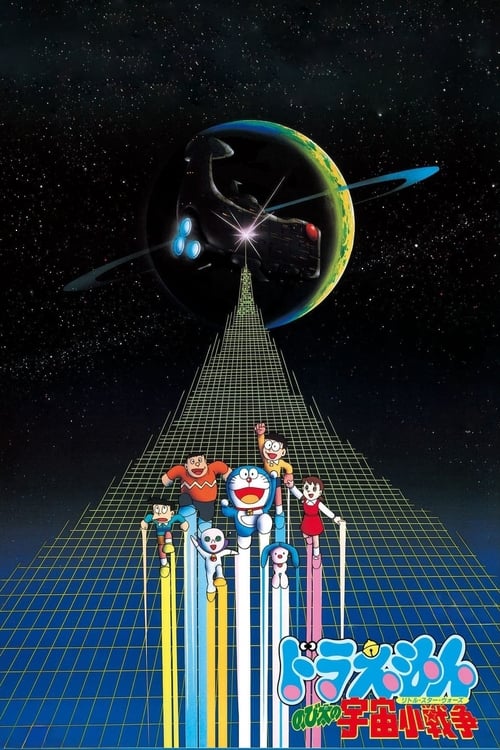
Doraemon: Nobita's Little Star Wars
Plot
Nobita helps Doraemon to create a space movie. After Dekisugi fails to help them, the duo rope in Shizuka, who prefers to make a film about dolls.
Get the Weekly Woke Watchlist
New and trending movies scored for woke bias, preachy messaging, and forced political themes — before you waste your evening.
No spam. One useful email per week.
Overall Series Review
Categorical Breakdown
The narrative focuses on universal themes of friendship, courage, and fighting against tyranny, which are merit-based virtues. The conflict is political—a coup by a dictator (Gilmore/PCIA) against a deposed president (Papi)—and is not framed through an intersectional or racial lens. Characters are judged solely by their actions and commitment to Papi’s cause.
The film’s central conflict is a defense of liberty against a military dictatorship and totalitarian surveillance on an alien planet (Pirika). This is an anti-totalitarian theme that aligns with core values of Western/liberal civilization, not a critique of the characters' home culture. The children's home (Earth) is depicted as a safe refuge for the alien president.
Shizuka takes a significantly active and brave role in the final battle, becoming a formidable tank controller and piloting their spaceship when Suneo is paralyzed by fear. This depicts her taking a level in competence and courage, which is a positive, merit-based portrayal rather than an instant 'Girl Boss' trope. It shows complementary dynamics and individual vitality, not a systemic emasculation of males, as the other male characters also contribute actively.
The plot centers on a sci-fi military adventure against a dictator. There is no presence of alternative sexualities, deconstruction of the nuclear family unit, or discussion of gender theory. The structure is entirely normative.
The core moral framework is objective, clear, and universally understood: dictatorship and oppression are evil, and fighting for freedom is good. The plot does not contain any discussion of or hostility toward religion, nor does it promote moral relativism. The focus is on a political struggle, not a spiritual one.
Get the Weekly Woke Watchlist
New and trending movies scored for woke bias, preachy messaging, and forced political themes — before you waste your evening.
No spam. One useful email per week.