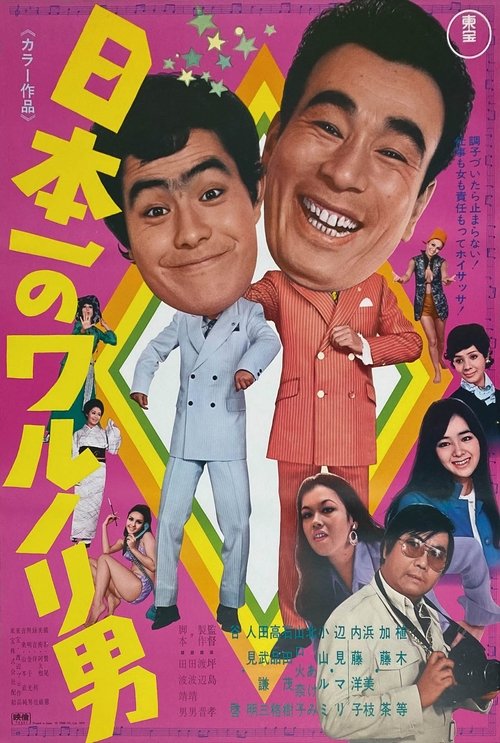
Japan's No. 1 Mischievous Man
Plot
The ninth installment of ten in Nippon Ichi film series.
Get the Weekly Woke Watchlist
New and trending movies scored for woke bias, preachy messaging, and forced political themes — before you waste your evening.
No spam. One useful email per week.
Overall Series Review
Categorical Breakdown
The narrative is set within an entirely Japanese cultural context. The central conflict revolves around an individual's career success, luck, and navigating a corporate conspiracy. Characters are defined by their jobs, their relationships to the main character, and their actions within the company structure, not by an immutable characteristic or a hierarchy of race. There is no vilification of 'whiteness' or forced diversity, as the cast is uniformly authentic to the film's setting.
The film is a corporate satire that mocks the absurdities and corruption within the Japanese business institution of Sekai Ceramics. The story does not suggest the culture is fundamentally corrupt or that ancestors are demonized. It is a domestic comedy focused on a local problem (corporate takeover), viewing Japanese institutions as something to be humorously exploited or navigated, not as a source of civilizational self-hatred. The home culture provides the backdrop for the protagonist's comical success.
The main plot is focused on the career rise of the male protagonist, a countryside teacher. Female characters are present, but they are not positioned as 'Girl Boss' figures whose perfection instantly resolves conflict. Men are portrayed as bumbling or scheming, typical of a comedy focused on an anti-hero figure, but this is a critique of individual male incompetence, not an ideological emasculation of all masculinity. The dynamics adhere to traditional 1970s gender roles without anti-natalist or anti-family messaging.
As a mainstream comedy film from 1970, the narrative adheres to a normative structure. The plot does not center on alternative sexualities or challenge the nuclear family as an 'oppressive' structure. Gender identity is not a theme, and the focus is on the secular, heterosexual world of work and romance typical of the time. Sexuality remains a private matter, and there is no lecturing on modern queer theory.
The core of the story is the secular world of business, career advancement, and corporate intrigue. The conflict is driven by greed and ambition, not religious doctrine. Traditional religion is completely absent from the narrative's central themes, meaning there is no opportunity for anti-theistic messaging or the vilification of religious characters. The moral code is simply the subjective one of an amoral comedy protagonist versus the established, corrupt business power structure.
Get the Weekly Woke Watchlist
New and trending movies scored for woke bias, preachy messaging, and forced political themes — before you waste your evening.
No spam. One useful email per week.