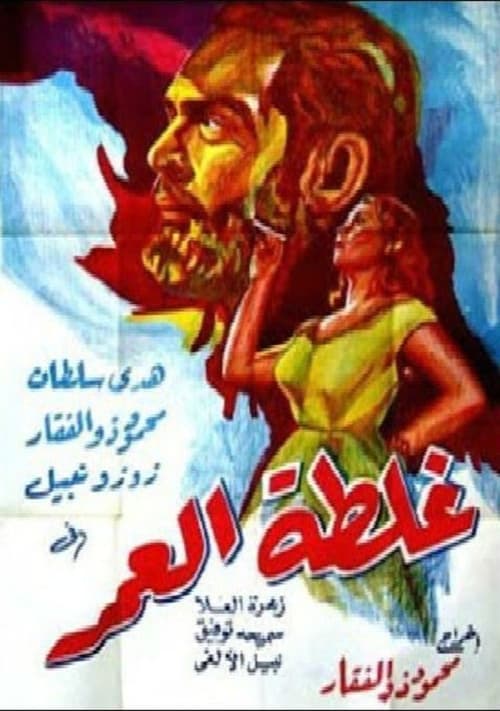
Ghaltet El Omr
Plot
Dr. Sami is subjected to harassment and arrogance from his wife, Munira. One of his patients is the singer Nadia, who visits his clinic for treatment. From here, Dr. Sami feels how gentle Nadia is. Dr. Sami's conditions change, and he even becomes preoccupied with Munira. Munira tries to find out the reason for this change, but fails to bring him back home, so she begins to spread rumors and scandals about him.
Get the Weekly Woke Watchlist
New and trending movies scored for woke bias, preachy messaging, and forced political themes — before you waste your evening.
No spam. One useful email per week.
Overall Series Review
Categorical Breakdown
The plot focuses entirely on a domestic dispute and personal character traits like 'arrogance' and 'gentleness.' The conflict does not rely on race, immutable characteristics, or an intersectional hierarchy. All characters are culturally and ethnically authentic to the setting, making the theme one of universal character merit.
The film is an Egyptian production from 1953, and the plot is a personal drama about marital infidelity and conflict. It does not criticize core Western institutions, nor does it demonstrate hostility toward the film's own cultural home or ancestors. The drama is contained within a private, personal sphere.
The conflict is explicitly framed by Dr. Sami suffering from his wife Munira's 'arrogance and harassment.' The contrast is drawn with the patient Nadia's 'gentle' nature, suggesting that the abrasive, non-complementary female behavior is the source of the marital breakdown. This stands in direct opposition to the 'Girl Boss' or emasculating trope, favoring traditional complementary gender dynamics.
The narrative is a straightforward heterosexual love triangle and marital drama. There is no presence of alternative sexualities, gender ideology, or deconstruction of the nuclear family beyond the natural conflict arising from infidelity.
The film is a secular domestic drama focused on moral choices like fidelity, harassment, and slander. It does not display hostility toward religion, frame traditional faith as the root of evil, or explicitly embrace moral relativism as a lectured theme. The characters’ actions are judged by a clear moral standard.
Get the Weekly Woke Watchlist
New and trending movies scored for woke bias, preachy messaging, and forced political themes — before you waste your evening.
No spam. One useful email per week.