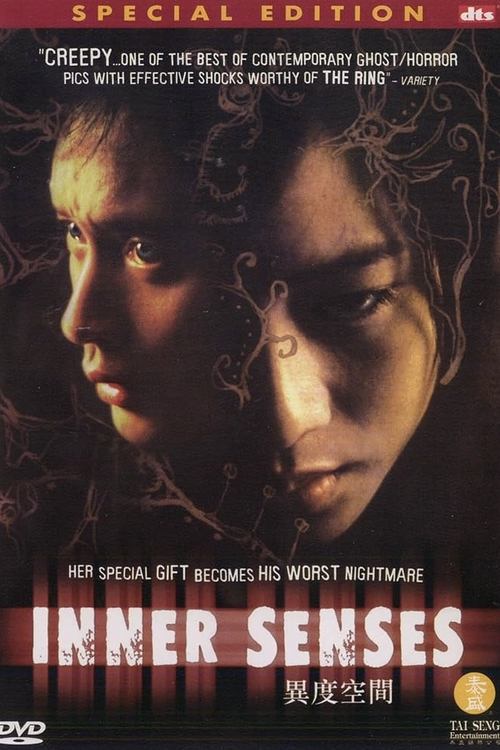
Inner Senses
Plot
This is the story of Yan, a young woman haunted by fleeting images of what she believes to be dead people. Told that it is all in her mind by her psychologist Jim, Yan still cannot find any other explanations for her visions. Soon, her suspicions are confirmed when Jim begins seeing the same things she does and the two begin to unravel a mystery that leads to a forgotten past
Get the Weekly Woke Watchlist
New and trending movies scored for woke bias, preachy messaging, and forced political themes — before you waste your evening.
No spam. One useful email per week.
Overall Series Review
Categorical Breakdown
The film is a Hong Kong production and its casting is culturally authentic to its setting. The entire conflict is built around the characters' individual psychological trauma, not on race, immutable characteristics, or a hierarchy of privilege. The narrative does not contain any vilification of 'whiteness' or forced insertion of diversity, as these concepts are not relevant to its context.
The movie's setting is contemporary Hong Kong, which is its home culture. The narrative focuses entirely on the personal, internal struggles of the two main characters, Jim and Yan, regarding repressed memories and mental health. There is no hostility or criticism directed toward Western civilization, one's home, or ancestors, as the story is not a commentary on civilizational values.
The female lead, Yan, is the opposite of a 'Girl Boss,' being a deeply troubled patient with a history of suicide attempts, emotional fragility, and a broken family background. The male lead, Jim, is introduced as a competent, respected professional, whose masculinity is not mocked or emasculated until his own psychological breakdown makes him the vulnerable one. The dynamic shifts from doctor-patient to a troubled relationship between two fragile individuals, offering a view of complementary, if complicated, emotional support. Motherhood or careerism is not a central theme.
The story is an intimate psychological horror and romantic drama between a man and a woman. There is no presence of alternative sexualities, sexual ideology, or deconstruction of the nuclear family beyond the background detail of one character having divorced parents. The focus remains on trauma and mental illness, not on issues of gender or sexual identity.
The core of the film's ambiguity is whether the visions are real ghosts (supernatural) or psychological manifestations (science/rationalism). The story ultimately leans toward a psychological explanation, framing the 'ghosts' as a product of intense guilt and trauma. This rationalist approach does not constitute hostility toward religion, specifically Christianity, and no religious characters are portrayed as villains or bigots. The morality explored is one of personal guilt and redemption, not subjective 'power dynamics.'
Get the Weekly Woke Watchlist
New and trending movies scored for woke bias, preachy messaging, and forced political themes — before you waste your evening.
No spam. One useful email per week.