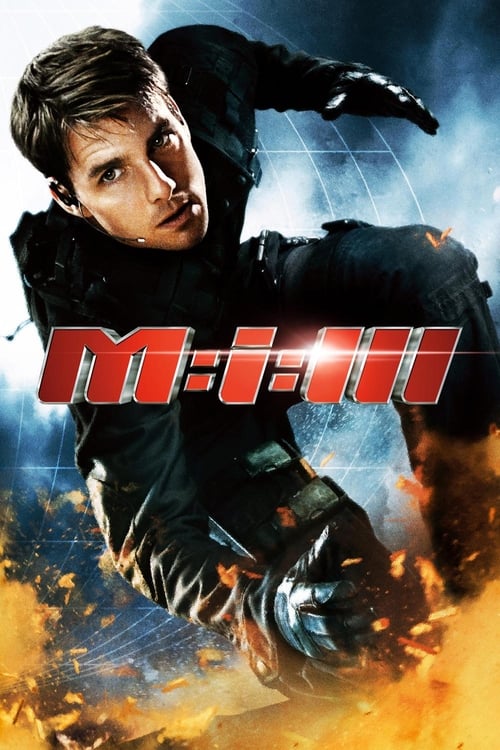
Mission: Impossible III
Plot
Retired from active duty, and training recruits for the Impossible Mission Force, agent Ethan Hunt faces the toughest foe of his career: Owen Davian, an international broker of arms and information, who's as cunning as he is ruthless. Davian emerges to threaten Hunt and all that he holds dear – including the woman Hunt loves.
Get the Weekly Woke Watchlist
New and trending movies scored for woke bias, preachy messaging, and forced political themes — before you waste your evening.
No spam. One useful email per week.
Overall Series Review
Categorical Breakdown
Characters are selected and valued entirely based on their specialized skills as spies and technical experts, reflecting a universal meritocracy. The core team includes a Black male (Luther Stickell) and an Asian female (Zhen Lei), both highly competent specialists whose roles are not defined by immutable characteristics. The hero, Ethan Hunt, is a White male, and the main villains (Owen Davian and the IMF traitor John Musgrave) are also White males, preventing the narrative from vilifying 'whiteness' as a group.
The movie's villain structure features internal corruption within the US government and the IMF organization. IMF Director John Musgrave, a White male authority figure, is the traitor whose motivation includes a desire to manufacture a crisis for a preemptive strike against the Middle East, based on a cynical, misguided 'patriotic' zeal to 'spread democracy.' This acts as a clear-cut critique of US intelligence zealotry and institutional corruption, not a blanket demonization of Western civilization or the national heritage itself. The ultimate goal of the hero is to protect the innocent and restore the integrity of his institution, honoring the idea of a just government.
The entire emotional thrust of the movie is Ethan Hunt's love for and need to rescue his wife, Julia Meade, a civilian nurse who is kidnapped and used as bait. She functions as the classic damsel in distress, the core value Ethan fights to protect. The film celebrates the hero's desire to retire for family life. The female field agents, Lindsey Farris and Zhen Lei, are competent but secondary team members. Zhen Lei is a skilled professional and is not presented as a 'Mary Sue' or 'Girl Boss' who instantly surpasses the male lead.
The narrative centers entirely around the traditional male-female pairing of Ethan Hunt and Julia Meade, culminating in their marriage and Hunt's desire for a normative family life. Sexual identity or alternative sexualities are absent from the story, character development, and dialogue. The film presents a normative structure without any political commentary or lecturing on gender theory.
The movie operates with a clear, transcendent moral law where good and evil are objectively defined. Ethan Hunt and his team sacrifice their safety for the sake of innocent life and to prevent a global catastrophe. The villain Owen Davian is pure, remorseless evil, and the internal villain Musgrave is driven by corrupt, amoral pragmatism. Traditional religion is not featured in a positive or negative light, ensuring that the moral framework is objective without hostility toward faith.
Get the Weekly Woke Watchlist
New and trending movies scored for woke bias, preachy messaging, and forced political themes — before you waste your evening.
No spam. One useful email per week.