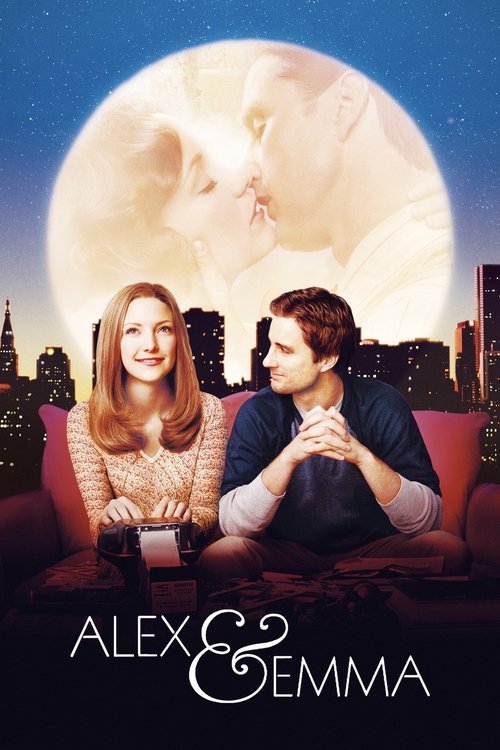
Alex & Emma
Plot
Writer Alex Sheldon must finish his novel within a month. If he doesn't, he won't get paid. And, if that happens, angry Mafia types to whom he owes money will come looking for him. In order to expedite things, Alex hires typist Emma Dinsmore and begins dictating his novel. The book is about a doomed love affair between a character similar to Alex and a character named Polina Delacroix. But, as Alex falls for Emma, his work takes a different turn.
Get the Weekly Woke Watchlist
New and trending movies scored for woke bias, preachy messaging, and forced political themes — before you waste your evening.
No spam. One useful email per week.
Overall Series Review
Categorical Breakdown
The movie does not employ an intersectional lens; characters are primarily judged by their personal merit, faults, and romantic chemistry. The central conflict involves a white male protagonist who owes money to Cuban loan sharks, which is a crime subplot and not a narrative lecture on systemic oppression or white vilification. The casting is colorblind or standard for the time, featuring no forced diversity or historical race-swapping.
The narrative has no detectable hostility toward Western civilization, one's home, or ancestors. The internal novel being dictated is set in 1924, a historical time period that is visually captured for romantic backdrop rather than being deconstructed as a site of oppression. The film focuses on personal finance, writer’s block, and romance, not civilizational self-hatred.
The female lead, Emma Dinsmore, is a 'stubborn' and 'opinionated' stenographer whose critiques and influence drive the male lead, Alex, to improve both his novel and himself. This dynamic portrays the woman as a necessary and superior emotional/creative corrective to the bumbling, debt-ridden male. However, the trope remains within the bounds of a traditional romantic comedy and does not include anti-natalist messaging or frame motherhood as a 'prison.'
The core of the movie is a traditional, heterosexual romantic comedy focused entirely on the male-female pairing. The plot contains no centering of alternative sexualities, deconstruction of the nuclear family, or lecturing on queer or gender theory. Sexuality remains a private aspect of the main romantic relationship.
The movie is a romantic comedy focused on personal creative and financial struggles. It contains no anti-theism or critique of traditional religion. Faith or morality is not a theme, with the conflict being purely secular (gambling debt and writer's block), thus avoiding the anti-theistic trope entirely.
Get the Weekly Woke Watchlist
New and trending movies scored for woke bias, preachy messaging, and forced political themes — before you waste your evening.
No spam. One useful email per week.