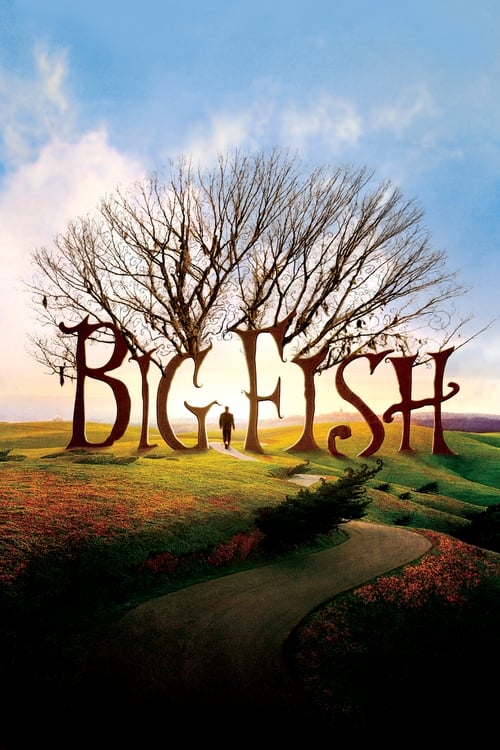
Big Fish
Plot
Throughout his life Edward Bloom has always been a man of big appetites, enormous passions and tall tales. In his later years, he remains a huge mystery to his son, William. Now, to get to know the real man, Will begins piecing together a true picture of his father from flashbacks of his amazing adventures.
Get the Weekly Woke Watchlist
New and trending movies scored for woke bias, preachy messaging, and forced political themes — before you waste your evening.
No spam. One useful email per week.
Overall Series Review
Categorical Breakdown
Characters are judged by their spirit, imagination, and actions, not by their immutable characteristics or race. The focus is entirely on the personal, generational conflict between a father and son. The fantastical characters Edward meets, such as a giant and a conjoined-twin lounge singers, are defined by their unique mythical presence, not by a political intersectional lens.
The narrative is set in the American South, and the primary quest is about honoring a family legacy, reconciling a broken father-son relationship, and committing to one's home and wife. Edward's fantastic adventures are a means to return to and protect his family and his idealized small town of Spectre. The central institutions of family and home are treated with respect and are the ultimate emotional anchor for the protagonist's journey.
The core romance is a traditional male-female pairing, with the male protagonist undertaking an epic quest to prove his devotion to the woman he loves, Sandra, and remain committed to her. Edward is depicted as an adventurous, determined, and romantic man whose masculinity is protective. The woman he seeks is celebrated as his true love and the heart of his family. The narrative celebrates motherhood as William's wife is pregnant, underscoring the vital continuation of the family line.
The story is exclusively centered on the traditional male-female pairing of Edward and Sandra, and the subsequent nuclear family of Edward, Sandra, and Will. There are no elements of alternative sexualities, sexual ideology, or deconstruction of the nuclear family presented in the narrative.
The film does not engage in hostility toward religion. The core conflict is between literal fact (science/journalism) and metaphorical story (myth/imagination). Edward's 'mythic' reality serves as a source of transcendent meaning, suggesting that a higher, creative truth exists beyond mundane facts. The final message advocates for the power of belief and narrative as a source of strength and comfort in the face of death.
Get the Weekly Woke Watchlist
New and trending movies scored for woke bias, preachy messaging, and forced political themes — before you waste your evening.
No spam. One useful email per week.