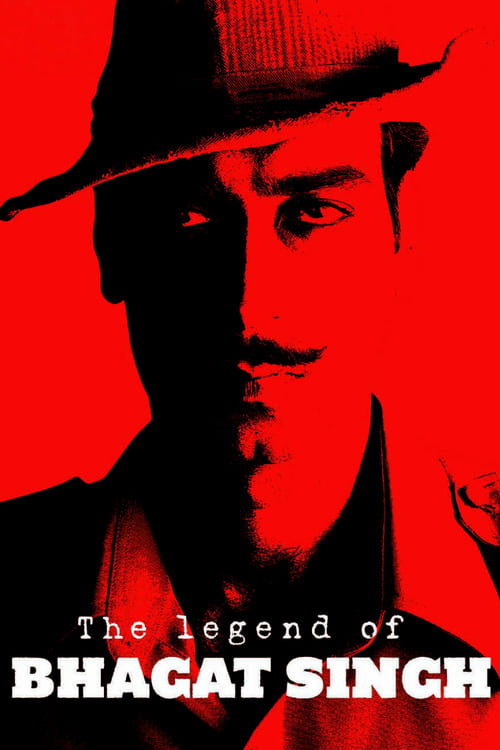
The Legend of Bhagat Singh
Plot
Born in British India, Bhagat Singh witnesses numerous atrocities during his childhood and grows up to become one of the most fearless freedom fighters in the country.
Get the Weekly Woke Watchlist
New and trending movies scored for woke bias, preachy messaging, and forced political themes — before you waste your evening.
No spam. One useful email per week.
Overall Series Review
Categorical Breakdown
The plot's entire engine is the conflict between the oppressed Indian collective and the colonial British collective, functioning as an anti-colonial 'us versus them' narrative based on national/racial identity. British characters (representatives of 'whiteness' in this context) are vilified as cruel, abusive, and colonial tyrants who commit atrocities. The focus is entirely on a struggle for liberation from systemic oppression by an imperial power.
The film expresses powerful national affirmation and deep gratitude for the sacrifices made by freedom fighters. The narrative is a pure celebration of Indian heroes and their devotion to their 'home' and 'nation,' presenting institutions like family (supporting a revolutionary) and the idea of the nation as sacred. It actively defends the home culture by fighting for its sovereignty.
The core cast consists of male heroes whose revolutionary struggle and political ideology drive the plot. Female characters, such as the protagonist's mother and fiancée, occupy traditional, complementary roles and are primarily depicted as figures of familial support and emotional inspiration. There is no presence of the 'Girl Boss' trope, the emasculation of male characters, or anti-natalist messaging.
The narrative is completely focused on a historical and political anti-colonial struggle. Alternative sexualities or gender ideology are absent from the plot, which maintains a normative structure based on traditional male-female pairing and political comradeship.
The protagonist, Bhagat Singh, is prominently depicted as a committed, intellectual atheist. A key part of his ideology involves a rationalist critique of traditional religious beliefs and social ills like the caste system, which is explicitly in line with the revolutionary's moral framework. The narrative elevates a secular, socialist morality over traditional religious faith, positioning a Transcendent Morality based on political liberation and Marxist-influenced humanism.
Get the Weekly Woke Watchlist
New and trending movies scored for woke bias, preachy messaging, and forced political themes — before you waste your evening.
No spam. One useful email per week.