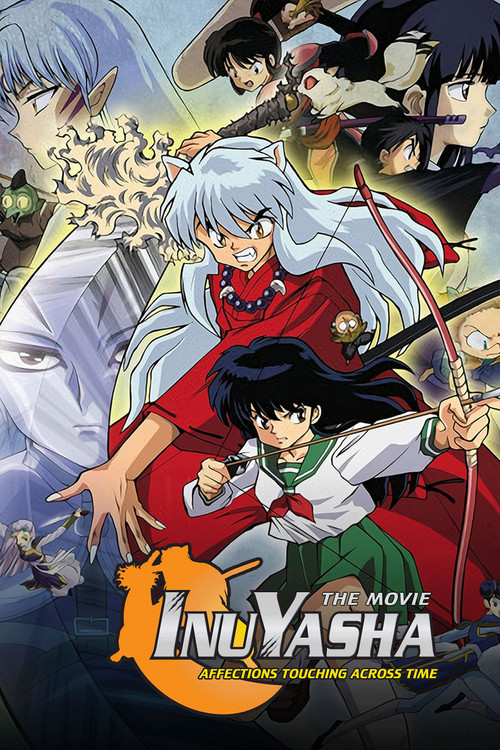
Inuyasha the Movie: Affections Touching Across Time
Plot
InuYasha is a half-demon who was trapped in the Legendary Tree and was set free by Kagome, a girl who traveled 500 years through time. This time, both of them will have to face Menomaru, a Chinese demon whose father, known as Hyoga, came 300 years ago to invade Japan, but was stopped by InuYasha's Father. InuYasha and Kagome, along with Sango, Miroku, Shippou, Kaede and Myoga, will try to stop Menomaru in his becoming the most powerful demon ever.
Get the Weekly Woke Watchlist
New and trending movies scored for woke bias, preachy messaging, and forced political themes — before you waste your evening.
No spam. One useful email per week.
Overall Series Review
Categorical Breakdown
The plot focuses on a traditional conflict between a native Japanese hero group and a foreign invading demon from the 'Continent,' explicitly referencing China. The central hero, Inuyasha, is an outcast due to his half-demon bloodline, but he is judged and succeeds based on his strength, courage, and moral choices, not on an immutable characteristic hierarchy. The entirely East Asian and demonic cast eliminates any possibility of 'white vilification' or 'race-swapping.'
The central conflict involves the heroes fighting to protect their homeland, Japan, from destruction and soul absorption by an outside, invading demonic force. Ancestors are respected; Inuyasha's father is the great demon who originally defeated the villain's progenitor. The Feudal Japanese setting is treated as a valued place worth defending, showing strong gratitude for heritage and home.
Female characters Sango, a highly skilled demon slayer, and Kagome, a powerful priestess, are essential and competent contributors to the team's success. Their strength is not portrayed as instant perfection; Kagome struggles when mind-controlled by the villain, and Sango is a trained professional. The male lead, Inuyasha, is a formidable protector, and the male monk Miroku is a powerful fighter, though he is consistently a 'lecherous' comic foil whose behavior is directly countered by Sango. The story centers on a romantic, male-female pairing as the main emotional anchor.
The narrative makes no reference to alternative sexualities, gender identity, or queer theory. The central emotional and romantic themes are focused entirely on the traditional male-female pairing of Inuyasha and Kagome, with another traditional pairing between Miroku and Sango. Sexuality is not a theme for political discussion but a source of light, traditional comedy in Miroku's character.
Spiritual power and faith-based elements like the priestess's sacred arrows, Kagome's Shikon Jewel-detecting ability, and the Buddhist monk Miroku's Wind Tunnel are sources of genuine power and good, directly opposing the demonic evil. Morality is transcendent, clearly defining the heroes' spiritual purity against the villain's soul-absorbing destruction. The movie explicitly acknowledges a higher moral law and the spiritual strength of its characters.
Get the Weekly Woke Watchlist
New and trending movies scored for woke bias, preachy messaging, and forced political themes — before you waste your evening.
No spam. One useful email per week.