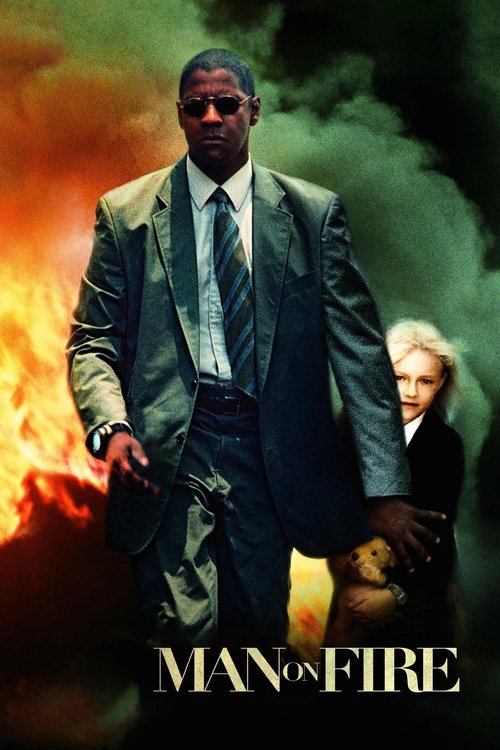
Man on Fire
Plot
Jaded ex-CIA operative John Creasy reluctantly accepts a job as the bodyguard for a 10-year-old girl in Mexico City. They clash at first, but eventually bond, and when she's kidnapped he's consumed by fury and will stop at nothing to save her life.
Get the Weekly Woke Watchlist
New and trending movies scored for woke bias, preachy messaging, and forced political themes — before you waste your evening.
No spam. One useful email per week.
Overall Series Review
Categorical Breakdown
The film focuses entirely on a universal theme of professional competence and personal redemption. John Creasy is judged by his skill set and his moral transformation, not by his immutable characteristics. Casting is colorblind, with a Black protagonist fighting for a multi-racial family. The narrative does not utilize an intersectional hierarchy or vilify a specific race for ideological purposes.
The central conflict is the kidnapping and the systemic corruption of the local Mexican police force and cartel elements. The hero, an American ex-CIA operative, is flawed but represents a shield against chaos. The film critiques the institutional failure in the host country, but it does not frame American or Western civilization as inherently corrupt or racist. The hero's final sacrifice is a noble act of protective loyalty.
The core relationship is a traditional male-female mentorship and substitute father-daughter bond, which is the source of the male protagonist’s recovery. Creasy is initially emasculated by alcoholism and suicidal depression, then re-masculinized by accepting the role of the child's protector. Motherhood and family are central to the plot as the targets of villainy, with the narrative celebrating protective masculinity and the innocence of a young girl.
The narrative centers entirely on a traditional male-female familial and protective bond. Alternative sexualities or gender ideology are not present in the story. The film adheres to a normative structure without any political lecturing on sexuality or gender theory.
The protagonist's journey is explicitly spiritual, involving an existential crisis and a return to faith. Creasy begins to read the Bible and quotes scripture. The failed suicide attempt is interpreted by a friend as a sign that God intends for him to live. Faith is presented as a direct source of strength and a guiding moral law for Creasy's pursuit of justice, directly supporting a transcendent morality.
Get the Weekly Woke Watchlist
New and trending movies scored for woke bias, preachy messaging, and forced political themes — before you waste your evening.
No spam. One useful email per week.