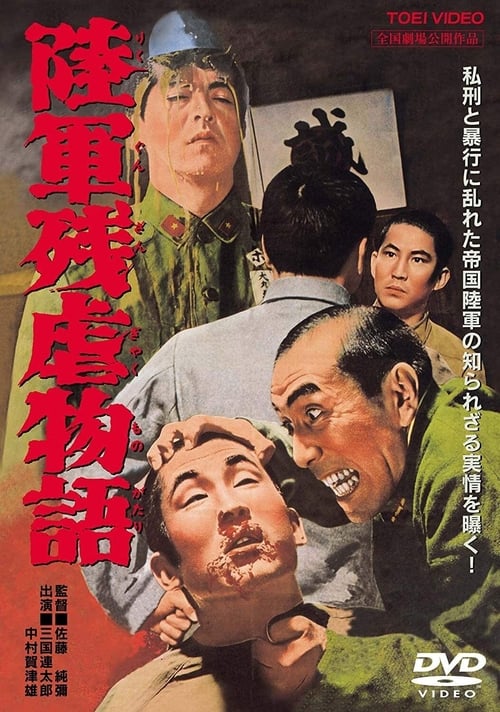
Tale of Army Brutality
Plot
Director Jun'ya Satô's debut film focuses on the inhuman training of recruits, the brutal drill system that reigned in the Japanese army during World War II, where in the first two years of training, ordinary people were turned into inhuman killers. For his first film, the director was awarded the Blue Ribbon Awards in the Debutant of the Year nomination.
Get the Weekly Woke Watchlist
New and trending movies scored for woke bias, preachy messaging, and forced political themes — before you waste your evening.
No spam. One useful email per week.
Overall Series Review
Categorical Breakdown
The core of the plot focuses on a class/rank conflict—the systemic cruelty of officers exploiting common recruits and civilians. The theme is universal institutional abuse, not a modern intersectional hierarchy. Character merit is crushed by the system, but the narrative does not vilify an abstract 'whiteness' or rely on forced diversity, as the cast is historically and ethnically authentic to the Japanese setting.
The film criticizes a specific totalitarian ideology and institution: the Imperial Japanese Army’s brutal system. This is a targeted critique of a specific past national evil, not a broad condemnation of the entire Japanese culture, home, or ancestors. The narrative functions as a cautionary moral tale against the chaos and inhumanity of militarism, aligning it with a respect for fundamental liberties, not civilizational self-hatred.
The primary narrative is a male-centric war/training drama. Secondary plot elements feature a mother grappling with a dilemma about leaving her husband for a lover. This is a traditional domestic conflict (adultery, family stability) that centers female characters in classic marital roles, not the modern 'Girl Boss' trope, the emasculation of males, or anti-natalist messaging.
The film is a 1963 Japanese war and domestic drama. There is no evidence of centering alternative sexualities, deconstructing the nuclear family, or lecturing on contemporary gender ideology.
The film is an indictment of a moral vacuum—the extreme cruelty within the military—which implicitly advocates for a higher moral law. There is no evidence of hostility toward religion, specific vilification of religious characters, or explicit embrace of moral relativism that frames traditional faith as the root of evil.
Get the Weekly Woke Watchlist
New and trending movies scored for woke bias, preachy messaging, and forced political themes — before you waste your evening.
No spam. One useful email per week.