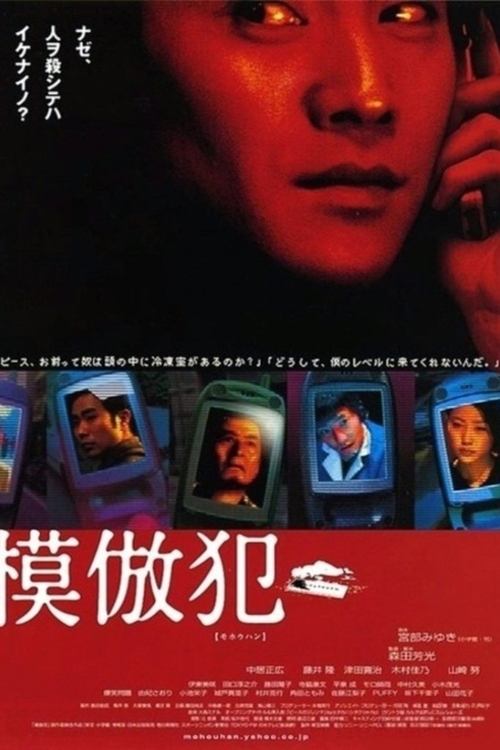
Copycat Killer
Plot
The story of a criminal who abducts and kills women, and those who try to catch him. Nakai is cast as a cold-blooded, intelligent and evil guy who uses the media to announce and show his murders live to the public.
Get the Weekly Woke Watchlist
New and trending movies scored for woke bias, preachy messaging, and forced political themes — before you waste your evening.
No spam. One useful email per week.
Overall Series Review
Categorical Breakdown
The story is set entirely within a single, ethnically homogenous culture, Japan. The conflict is based on individual psychology, class differences between the young rich killers and the middle/working-class victims, and the ethics of media coverage, not race or intersectional hierarchy. Character merit is the sole measure of value; the evil is shown to be universal and psychological.
The movie is highly critical of specific aspects of modern Japanese society, specifically its intense media obsession, materialism, and the resulting 'collapse of the family unit.' This criticism is an internal cultural warning against modern decay, not a condemnation of the national heritage or ancestors. The moral center of the film is the wise grandfather, a pillar of traditional community, who articulates a desire for heroic action and love, which serves as a defense of civilizational virtue.
The main investigating figure, a journalist, is a competent woman who is also happily married, a dynamic that avoids the emasculation of her husband or the 'Girl Boss' trope. The victims are female, which is standard for the serial killer genre. The narrative heavily valorizes the family unit, showing that the killer's motivation stems from a childhood of parental abandonment, while the victim’s family finds strength and hope in their bonds, directly contradicting anti-natalist messaging.
The narrative makes no mention of sexual ideology, alternative sexualities, or gender identity. The focus is strictly on a serial killer's pursuit of notoriety and the ensuing police/media response. The nuclear family unit is portrayed as the normative structure under attack by the killer's actions, and its preservation is the film's source of hope.
The core moral struggle is not focused on organized religion. The villain is a nihilist seeking celebrity through atrocious acts. The hero, the grandfather, delivers a transcendent moral message to the killer, asserting that moral truth is objective and that heroic love is the true path to creating a sensation in the world, positioning the film against moral relativism.
Get the Weekly Woke Watchlist
New and trending movies scored for woke bias, preachy messaging, and forced political themes — before you waste your evening.
No spam. One useful email per week.