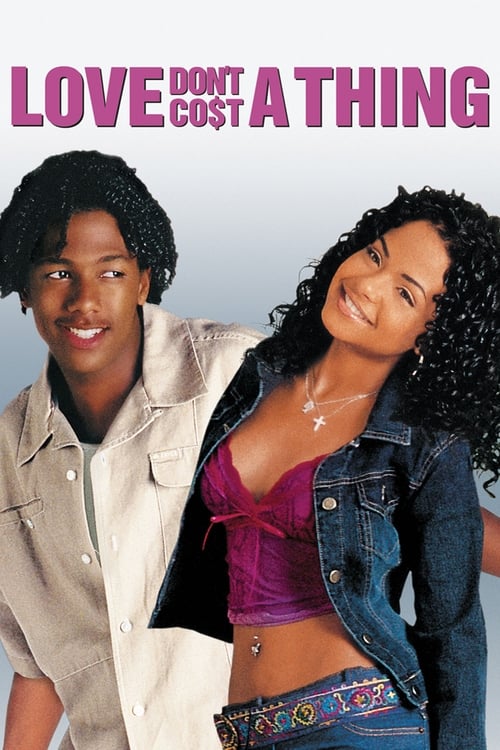
Love Don't Co$t a Thing
Plot
A high school outcast pays a cheerleader to pose as his girlfriend so he can be considered cool.
Get the Weekly Woke Watchlist
New and trending movies scored for woke bias, preachy messaging, and forced political themes — before you waste your evening.
No spam. One useful email per week.
Overall Series Review
Categorical Breakdown
The narrative critiques the superficiality of high school social strata, promoting the idea of character and merit (the male lead’s intelligence and the female lead’s hidden kindness) over external attributes like money or popularity. The casting is a significant 'race-swap' from the original 1987 film, featuring a nearly all-Black main cast, but the plot does not use race to lecture on privilege, systemic oppression, or vilify whiteness; the conflict is social and economic (nerd vs. cool, poor vs. rich) rather than racial.
The institutions of family and home are treated with respect and viewed as positive anchors. The male lead's parents are portrayed as loving, supportive, and patient figures who attempt to guide their son toward becoming a man of character, even when he acts out due to his new ego. There is no hostility toward Western civilization, one's home, or ancestors, suggesting a respect for the sacrificial groundwork of the family unit.
Gender roles are traditional, with the plot centering on a conventional male-female pairing. The female lead, Paris, is not an instantly perfect 'Girl Boss' but is instead shown to be vulnerable, insecure, and ultimately desiring a genuine connection, not a career-first narrative. The male protagonist is not systematically emasculated; his character arc involves him finding authentic confidence and moral compass, with his father even offering lessons on 'how to be a man.' The portrayal of Paris's cheerleader friends as shallow is a typical high school movie trope, not an intentional deconstruction of gender.
The narrative follows a completely normative structure focused on a heterosexual teen romance and the formation of a traditional male-female relationship. There are no characters or subplots that center alternative sexualities, deconstruct the nuclear family, or promote any form of explicit queer or gender ideology.
The movie’s fundamental moral lesson is that value and love are found in authentic character, not in material wealth or superficial status. This central theme promotes a concept of intrinsic, non-monetary worth and a higher moral law of being true to oneself. There is no evident hostility toward religion or Christian figures; the theme supports transcendent morality.
Get the Weekly Woke Watchlist
New and trending movies scored for woke bias, preachy messaging, and forced political themes — before you waste your evening.
No spam. One useful email per week.