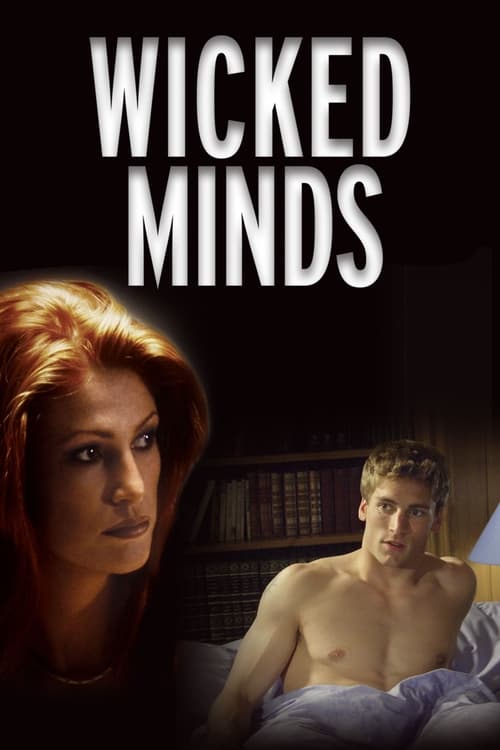
Wicked Minds
Plot
Holden returns home from college and is surprised to find his overpowering competitive father married to a much younger woman Lana. Holden quickly falls for the beauty and charisma of his step mother. A passionate affair begins between son and stepmother.
Get the Weekly Woke Watchlist
New and trending movies scored for woke bias, preachy messaging, and forced political themes — before you waste your evening.
No spam. One useful email per week.
Overall Series Review
Categorical Breakdown
The central conflict revolves entirely around the personal failings, lust, and murderous intent of the three main characters, who are all part of the same wealthy, high-status demographic. Character judgment is based on individual deceit and wickedness, not immutable characteristics or intersectional hierarchy. The story contains no evidence of 'race-swapping,' forced diversity, or political lecturing on privilege. Character is judged by the content of their actions and soul.
The narrative is a domestic thriller focused on a crime within a single, wealthy American/Canadian family. While the 'overpowering competitive father' is a wealthy corporate tycoon who is betrayed, this is a critique of a specific individual's behavior and the pathology of wealth, a common thriller trope. It does not generalize to a condemnation of Western civilization, its ancestors, or core institutions. The story maintains a focus on individual moral pathology rather than civilizational self-hatred.
The female lead, Lana, is a femme fatale who is explicitly manipulative, using her charm and sexuality to advance a hidden agenda, which leads to her husband's death. This is the classic 'wicked woman' trope, not a modern 'Girl Boss' or 'Mary Sue' archetype that is perfect and morally righteous. Her actions are shown to be destructive, not liberating. The movie deconstructs the family through betrayal but frames the betrayal as a wicked act, not a celebration of anti-natalism or career fulfillment over motherhood. The score is moderate because it does portray a woman whose power comes from emasculating/manipulating men, but she is the central villain.
The primary relationship and source of conflict is the passionate, illicit heterosexual affair between a son and his stepmother. The narrative maintains a normative structure, focusing on the traditional male-female pairing and the crime of adultery/murder within a nuclear family unit. There is no evidence of centering alternative sexualities, deconstructing the family as an oppressive institution, or any mention of gender ideology or queer theory lecturing.
The film explores themes of moral ambiguity, deception, and the dark side of human nature. The focus is psychological and criminal, with no direct attack on traditional religion or Christian characters being villains. However, one character notes that their generation has 'no faith in God government people anything,' suggesting a world that operates in a moral vacuum where 'trust no one' is the guiding message. This aligns with a kind of moral relativism where subjective desires (lust, money) drive all actions, but it is a spiritual vacuum rather than active hostility to religion, warranting a moderate score.
Get the Weekly Woke Watchlist
New and trending movies scored for woke bias, preachy messaging, and forced political themes — before you waste your evening.
No spam. One useful email per week.