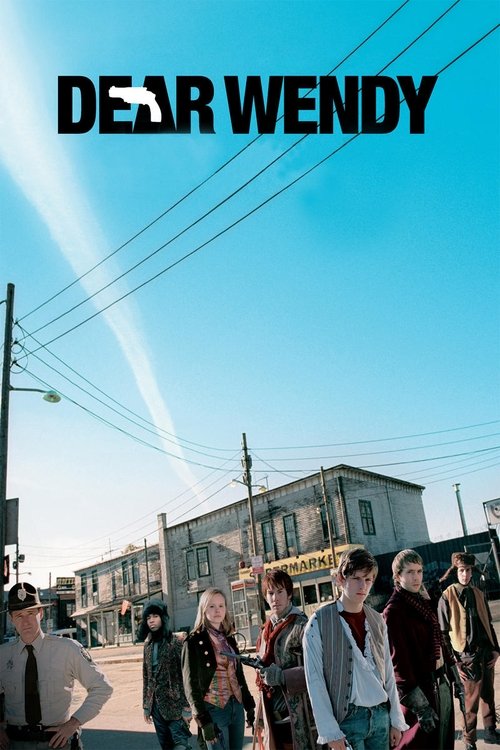
Dear Wendy
Plot
In a blue-collar American town, a group of teens bands together to form the Dandies, a gang of gunslingers led by Dick Dandelion. Following a code of strict pacifism at odds with the fact that they all carry guns, the group eventually lets in Sebastian, the grandson of Dick's childhood nanny, Clarabelle, who fears the other gangs in the area. Dick and company try to protect Clarabelle, but events transpire that push the gang past posturing.
Get the Weekly Woke Watchlist
New and trending movies scored for woke bias, preachy messaging, and forced political themes — before you waste your evening.
No spam. One useful email per week.
Overall Series Review
Categorical Breakdown
The narrative explicitly uses race to frame a conflict of power, suggesting the white protagonist is corrupted by “racist attitudes” and a feeling of “white privilege” that is challenged by a new black member. The story relies on a clear juxtaposition of the white male outcasts with the black character who is portrayed as a “young criminal son” freshly out of jail, using this contrast to criticize the social structure.
The film is an explicit and politically charged attack on American values and culture, particularly the nation’s relationship with guns and its claims of being a 'well-armed bringer of peace.' The setting is a dingy, depressed American town, and the central premise is that American society itself is the fundamentally corrupting force that leads otherwise good individuals to chaos.
The film does not contain a 'Girl Boss' trope or an anti-natalism message. It centers almost entirely on a group of young men and their masculine dysfunction. The sole prominent female figure is an older, protective black housekeeper/nanny, and the male protagonist's intense devotion is directed toward his gun, which he names Wendy, symbolizing a twisted substitution for a human relationship.
The core themes revolve around male identity, alienation, and a bizarre obsession with inanimate objects (guns) as 'partners.' The film does not center alternative sexualities, deconstruct the nuclear family structure, or contain overt messaging related to gender ideology or queer theory.
Traditional religion is overtly mocked through the 'mocking, ironic, satirical' use of a Christian hymn, which is noted to be anti-Christian. The characters create a secular, self-referential 'Temple' in an abandoned mine, establishing a cult of the gun that acts as a symbolic replacement for traditional faith and objective morality. The film operates on a relativistic premise where society, not spiritual or moral failing, is the root of evil.
Get the Weekly Woke Watchlist
New and trending movies scored for woke bias, preachy messaging, and forced political themes — before you waste your evening.
No spam. One useful email per week.