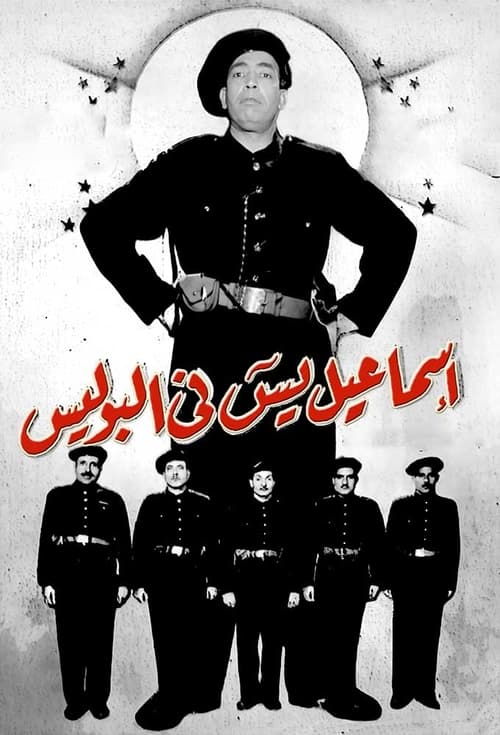
Ismail Yassine in the Police
Plot
Ismail lives in a local neighborhood, next to his fiancée and her mother who objects to their relationship because of his work in the police.
Get the Weekly Woke Watchlist
New and trending movies scored for woke bias, preachy messaging, and forced political themes — before you waste your evening.
No spam. One useful email per week.
Overall Series Review
Categorical Breakdown
Characters are judged by their professional position (policeman) and personal merit (honesty in the investigation), not immutable characteristics. As a 1956 Egyptian film with an entirely Arab cast, the concepts of 'whiteness' or intersectional hierarchy are absent and irrelevant. The conflict is purely personal and based on social status/occupation.
The film is set entirely within an Egyptian local neighborhood and focuses on local law enforcement and community relationships. It features no hostility toward Egyptian culture, ancestors, or core institutions. The police are central to the plot, and the narrative operates within a framework that assumes the value of these institutions.
The gender dynamics are traditional, focusing on an engagement and a mother's objection to her daughter's suitor. The female characters are defined by their familial roles (fiancée, mother). The mother is an obstacle, which is a classic dramatic device, not an attempt to emasculate the male lead. The narrative does not contain 'Girl Boss' tropes or anti-natalist messaging.
The core plot is a traditional heterosexual love triangle and engagement. The film predates the rise of modern queer theory and gender ideology by decades and is set in a conservative cultural context. There is no presence of alternative sexualities being centered, deconstruction of the nuclear family, or lecturing on gender theory.
As a film from a highly conservative and religious culture, the narrative does not exhibit hostility toward faith. The morality is objective, centering on the protagonist's choice between self-interest and 'telling the truth' (objective truth/justice). Traditional religion is not vilified or mocked.
Get the Weekly Woke Watchlist
New and trending movies scored for woke bias, preachy messaging, and forced political themes — before you waste your evening.
No spam. One useful email per week.