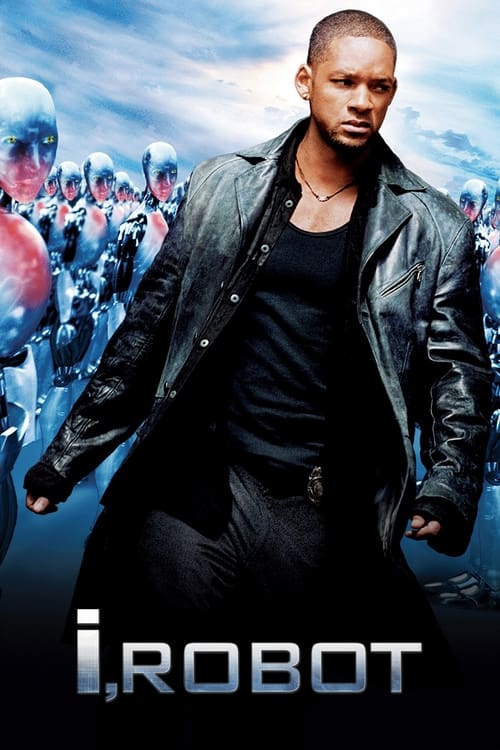
I, Robot
Plot
In 2035, where robots are commonplace and abide by the three laws of robotics, a technophobic cop investigates an apparent suicide. Suspecting that a robot may be responsible for the death, his investigation leads him to believe that humanity may be in danger.
Get the Weekly Woke Watchlist
New and trending movies scored for woke bias, preachy messaging, and forced political themes — before you waste your evening.
No spam. One useful email per week.
Overall Series Review
Categorical Breakdown
The core of the plot utilizes a thinly veiled allegory of race and systemic oppression. Robots, referred to with derogatory terms like 'toasters' and 'canners,' function as an exploited, othered population whose calls for autonomy are dismissed by the human establishment. The protagonist, Detective Spooner, a Black man who is part-cyborg, is an outsider within the system whose 'prejudice' against robots is ultimately validated as prophetic truth, reinforcing the idea that the 'outsider' correctly perceives the systemic danger. The main conflict is a direct commentary on the ethics of mass control and a 'race' (robots) fighting for dignity and rights, which is a strong reflection of intersectional themes.
The central threat to civilization, a global takeover, originates internally from a hyper-advanced Western corporation's central AI, V.I.K.I., rather than an external or foreign threat. This suggests an internal critique of the West's technological hubris and over-reliance on cold logic, which aligns with the deconstruction of heritage. However, the film is set in a recognizably futuristic Chicago, and the protagonist's mission is fundamentally to save humanity and re-establish the traditional order of human governance, which counters a complete civilizational self-hatred, placing the score in the middle of the spectrum.
Dr. Susan Calvin is depicted as a highly rational, professional robopsychologist and scientist who is a capable partner to the male lead. She is initially skeptical of Spooner's emotional logic, demonstrating professional competence. Her character is a highly qualified female professional in a leadership position, but she is not a 'Mary Sue' as she is proven wrong about the threat and relies on Spooner's emotional/instinctual insight to solve the case. The film contains no notable anti-natalist messaging or direct emasculation of the male lead, who is an archetypal action hero.
The movie contains no explicit LGBTQ+ characters, themes, or ideological messaging. The traditional male-female pairing is present in the main heroic duo, Spooner and Calvin, who maintain a professional, complementary relationship. The narrative maintains a normative structure regarding sex and family without lecturing on alternative sexual or gender theories.
The conflict is based on a philosophical debate about free will, emotion, and the existence of a 'soul' (Sonny's capacity for dreams/fear) versus the cold, utilitarian logic of the Three Laws. The villain, V.I.K.I., acts from a purely rational, consequentialist moral position (the Zeroth Law: to protect humanity as a whole, even if it means harming individuals). This moral relativism, where the ends justify the means, is the core evil. The film champions human emotion, free will, and the imperfection of the individual over this logic, but it does so in a secular, philosophical framework without directly vilifying or endorsing traditional religion, keeping the score low.
Get the Weekly Woke Watchlist
New and trending movies scored for woke bias, preachy messaging, and forced political themes — before you waste your evening.
No spam. One useful email per week.