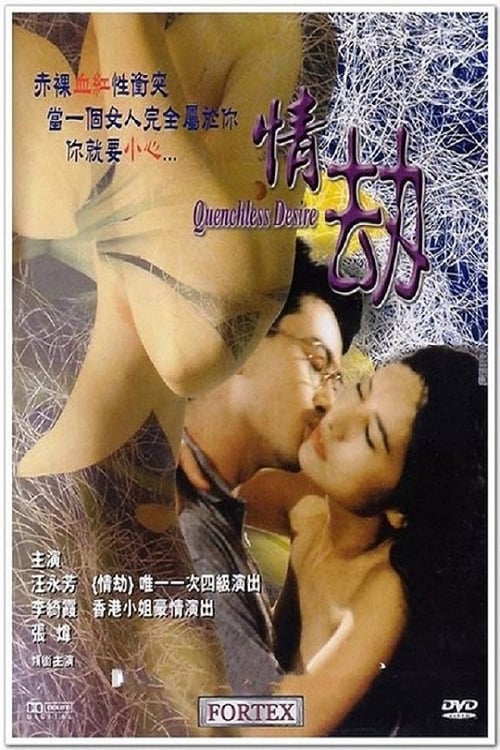
Quenchless Desire
Plot
A man, happy in his marriage but enjoying a trip with his wife, indulges in infidelity. On returning from his girlfriend, he wants to end his relationship guilty. But his mistress does not see it that way ...
Get the Weekly Woke Watchlist
New and trending movies scored for woke bias, preachy messaging, and forced political themes — before you waste your evening.
No spam. One useful email per week.
Overall Series Review
Categorical Breakdown
The film is a Hong Kong production and does not feature Western concepts of 'whiteness,' 'race-swapping,' or systemic oppression lectures. Characters are defined purely by their moral choices and personal actions related to infidelity and obsession, not by immutable characteristics. The narrative operates on a universal meritocracy of moral accountability.
The movie is a Hong Kong thriller with no apparent commentary on Western civilization, history, or political systems. The primary domestic setting—the family unit—is framed as a 'pretty fine unit' that does not deserve to be put in jeopardy by the husband’s actions. The conflict is entirely personal and moral, not a critique of civilizational values.
The female villain is not a 'Girl Boss' who succeeds through competence, but an unstable and mentally frustrated antagonist who violently entraps a male who betrayed his family. The film 'almost delights in the fact that it's portraying the male as weak when sex is in the air' and a friend encourages his toxic behavior. The narrative strongly values the 'loving and tender' nuclear family unit that the infidelity jeopardizes. The score is low because it celebrates the family but is not a pure 1/10 due to the extreme emasculation of the male lead.
The plot is strictly a traditional love triangle and infidelity thriller involving a married man, his wife, and his female mistress. The focus is entirely on the corrosive effect of heterosexual adultery on the nuclear family structure. There is no presence of alternative sexualities, deconstruction of the nuclear family through a queer theory lens, or mention of gender ideology.
The film is a secular thriller focused on the moral consequences of lust, betrayal, and obsession. It does not contain any religious themes, hostility toward religion, or commentary on objective versus subjective morality beyond the obvious consequences of the characters' immoral choices. The transgression and ensuing horror are secular.
Get the Weekly Woke Watchlist
New and trending movies scored for woke bias, preachy messaging, and forced political themes — before you waste your evening.
No spam. One useful email per week.