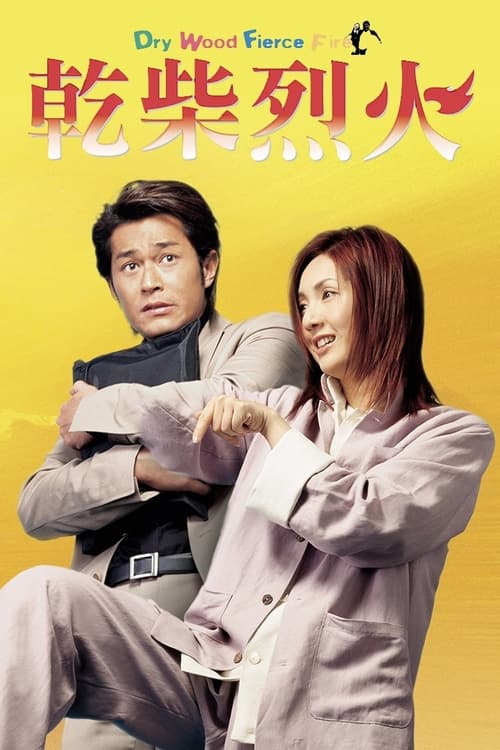
Dry Wood, Fierce Fire
Plot
A Chinese doctor/herbalist has the uncanny ability to discern a problem with just a superficial touch on the pulse and look at the tongue. This little romantic comedy about such a person could benefit from such an exam.
Get the Weekly Woke Watchlist
New and trending movies scored for woke bias, preachy messaging, and forced political themes — before you waste your evening.
No spam. One useful email per week.
Overall Series Review
Categorical Breakdown
The film is a Hong Kong production featuring an entirely East Asian cast, which is historically authentic and not a forced insertion. The narrative focuses on individual personality flaws (awkwardness, physical weakness) and character merit (Alice's skills as a journalist and herbalist) rather than intersectional hierarchy or immutable characteristics. There is no presence of 'whiteness' to vilify or lecture on.
The movie is set in contemporary Hong Kong and focuses on professional and romantic life. It features a positive representation of Chinese traditional culture, specifically Chinese herbal medicine and martial arts, which the protagonist Alice practices and which is a source of her unique character. The narrative does not criticize its own 'Western' or local culture as fundamentally corrupt, nor does it elevate external cultures as morally superior.
The score is slightly higher than baseline due to the gender dynamics. The lead female character, Alice, is highly competent, being a successful journalist, a Chinese herbalist, and a martial artist, while the male lead, Ryan, is fainting-prone and physically weak, a comedic emasculation trope. Furthermore, the new publisher, Michelle, is a powerful, successful 'Girl Boss' figure. However, the core of the film is a traditional romantic pursuit, and the final happy ending celebrates the complementary connection between the male and female lead, mitigating the extreme '10/10' feminist elements. Motherhood and career are not a central, conflicting theme.
The narrative is a straightforward heterosexual romantic comedy centered on a traditional love triangle between one man and two women. The standard structure of a male-female pairing and eventual nuclear family (implied by the romantic conclusion) is the norm. Sexuality is a private matter related to romantic pursuit, and the movie contains no overt centering of alternative sexualities or lecturing on gender theory.
The movie's cultural references are toward Chinese traditional medicine and martial arts, not Western religion. There is no presence of Christian characters to be vilified, nor is there a critique of traditional religion as the root of evil. The romantic comedy structure is built upon the objective truth that Alice and Ryan's 'good hearts and good personalities' are what make them a transcendent moral match.
Get the Weekly Woke Watchlist
New and trending movies scored for woke bias, preachy messaging, and forced political themes — before you waste your evening.
No spam. One useful email per week.