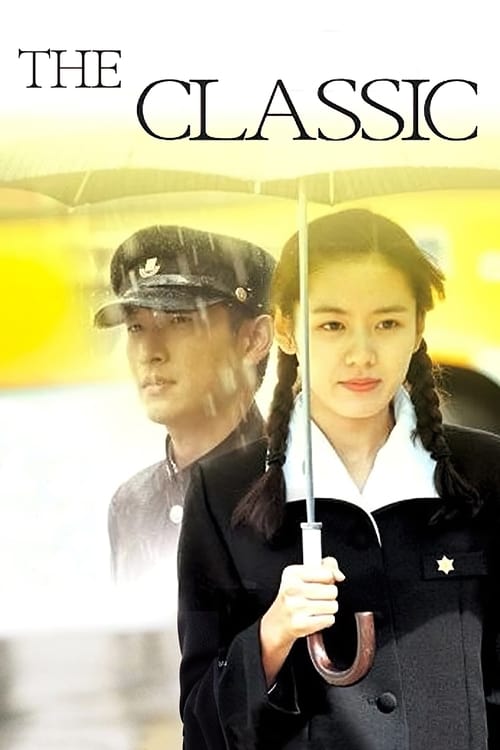
The Classic
Plot
Ji-hae's friend is having problems expressing her feelings to the boy she loves, so she asks Ji-hae to write e-mails to him in her name. As the boy falls in love with her letters, Ji-hae discovers the story of her mother's romance which is remarkably similar to her own circumstances.
Get the Weekly Woke Watchlist
New and trending movies scored for woke bias, preachy messaging, and forced political themes — before you waste your evening.
No spam. One useful email per week.
Overall Series Review
Categorical Breakdown
The film centers entirely on South Korean characters within a specific national and cultural context, removing any possibility of vilification of "whiteness" or forced insertion of Western-style diversity. Characters are defined by their virtues, sacrifices, and personal insecurities, reflecting a universal meritocracy of the heart. The narrative's core conflict is a love triangle set against class and societal expectations, not race or intersectional hierarchy.
The movie contrasts two distinct eras of Korean society—the conservative 1960s military regime and the modern 2003 period—suggesting the daughter's generation realizes the unfulfilled aspirations of the past. This critique is internal to Korean social systems like arranged marriage and is framed as progress for the home culture, not self-hatred toward Western civilization. The overall tone respects the past, using the mother's story as a source of romantic and familial legacy for the daughter.
The female leads are complex, relatable characters who face internal and external struggles regarding love and duty, not perfect "Girl Boss" archetypes. Both the mother and daughter exhibit individual growth and have qualities independent of their romantic interests, such as the daughter's interests in taekwondo and university life. The film celebrates the mother's romance and the inherited, powerful connection between mother and daughter, making it strongly pro-family and pro-maternal in its thematic focus.
The entire plot focuses on two parallel heterosexual love stories and the formation of the nuclear family across generations. The structure is built around traditional male-female pairings and the enduring nature of romantic love. The film contains no discussion of or focus on alternative sexualities, deconstructing the nuclear family, or gender ideology.
The main themes are fate, destiny, sacrifice, and the belief in transcendent love that connects two generations. The narrative relies on a sense of a higher, fated connection between souls. The conflict is purely personal and social, with no depiction of religious characters as villains or any lecturing that advocates for moral relativism or hostility toward traditional faith.
Get the Weekly Woke Watchlist
New and trending movies scored for woke bias, preachy messaging, and forced political themes — before you waste your evening.
No spam. One useful email per week.