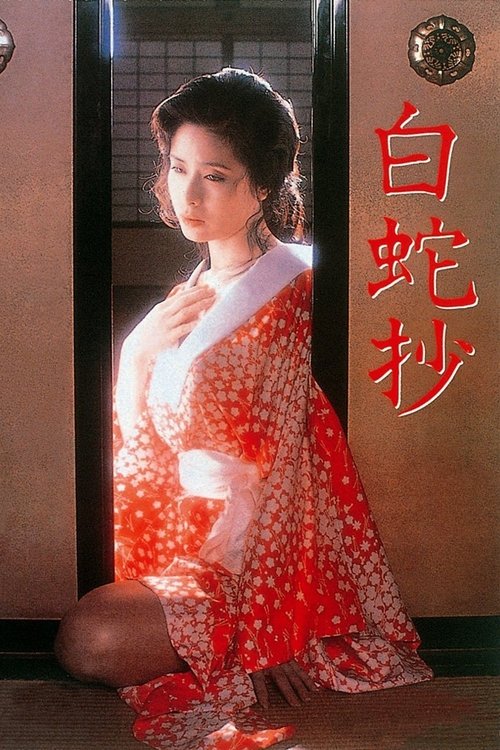
White Snake Enchantment
Plot
Uta married a priest who saved her when she tried to commit suicide at a waterfall. The love triangle between a lustful priest, his second wife and his son Masao.
Get the Weekly Woke Watchlist
New and trending movies scored for woke bias, preachy messaging, and forced political themes — before you waste your evening.
No spam. One useful email per week.
Overall Series Review
Categorical Breakdown
The film is a Japanese production set in Japan with Japanese characters. The drama centers entirely on personal desire, family conflict, and individual moral corruption. Character merit or failure is judged by personal action within the story, not by an intersectional hierarchy or vilification of 'whiteness.'
The narrative presents a Buddhist temple and its high-ranking priest as morally corrupt, a setting described as a 'temple of LUST.' This critiques a revered domestic institution and family structure. However, the critique targets the hypocrisy of the individuals inside the institution rather than framing the entire civilization or heritage as fundamentally corrupt in the modern political sense.
The family structure is completely deconstructed through the adultery, intense desire, and moral failings of the central figures. The male characters (the priest and the son) are depicted as being entirely consumed by lust and hypocrisy. The female lead, Uta, is a figure of tragic desire, not a 'Girl Boss' or perfect Mary Sue. The narrative uses the destruction of the family unit as its main dramatic engine.
The primary sexual conflict is a heterosexual love triangle involving the priest, his second wife, and his son. The deconstruction of the nuclear family stems from forbidden heterosexual lust and adultery, not from alternative sexual identities, gender ideology, or the promotion of 'queer theory.' Traditional male-female pairing is the normative structure being corrupted.
The spiritual guide, a Buddhist priest, is the central antagonist who is consumed by lust. The very site of worship is portrayed as being dedicated to sex, completely undermining the integrity and moral authority of the traditional religion. This represents a near-total rejection of a transcendent moral law, suggesting the spiritual institution is a shell for base desires.
Get the Weekly Woke Watchlist
New and trending movies scored for woke bias, preachy messaging, and forced political themes — before you waste your evening.
No spam. One useful email per week.