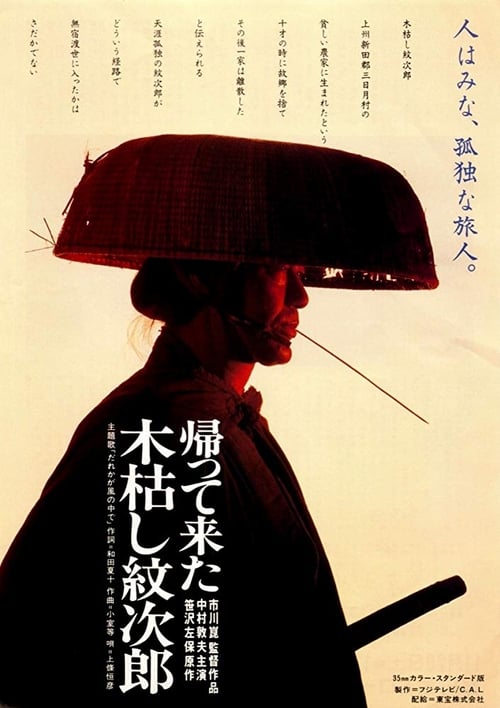
Kogarashi Monjirō Returns
Plot
Get the Weekly Woke Watchlist
New and trending movies scored for woke bias, preachy messaging, and forced political themes — before you waste your evening.
No spam. One useful email per week.
Overall Series Review
Categorical Breakdown
The movie is a Japanese historical drama (jidaigeki) set in the Edo period, featuring an entirely Japanese cast appropriate to the historical setting. Character merit is the sole focus, as the protagonist Monjirō's skill as a swordsman and his adherence to a personal moral code drive the plot. The narrative contains no discussion of race, immutable characteristics, intersectional hierarchy, or vilification of any outside group.
The film's setting is the Edo period, and the conflict is contained within the traditional world of wandering gamblers and yakuza. The plot revolves around a fundamental virtue: repaying a debt to one's benefactor. The narrative treats the home culture as the necessary backdrop for a story about personal honor and crime, not as fundamentally corrupt or racist. There is no attempt to demonize Japanese ancestors or institutions.
The main plot is male-centric, focusing on the swordsman Monjirō, his benefactor (a woodsman), the benefactor's son, and the male yakuza boss, Gorozo. Women are supporting characters, and the story does not contain any 'Girl Boss' tropes or messaging that seeks to emasculate the male protagonist. The narrative focuses on traditional, protective masculinity and male responsibility to fulfill a promise, with no anti-family or anti-natalist messaging present.
The narrative is a straight-forward historical action drama about a rogue swordsman and his mission to rescue a young man from yakuza. The entire focus is on the action, honor, and crime of the Edo period underworld. The film does not center on alternative sexualities, deconstruct the nuclear family, or engage in any form of gender theory lecturing.
As a historical Japanese film, the story is focused on a specific ethical code related to the *yakuza* and *toseinin* world, which deals with honor, debt, and revenge. The film's conflict is one of moral choice—whether Monjirō will return to his violent past to do a greater good. The morality is transcendent, rooted in a strong sense of duty and personal code, rather than subjective 'power dynamics.' Traditional religion is not a focus and is not portrayed as the root of evil.
Get the Weekly Woke Watchlist
New and trending movies scored for woke bias, preachy messaging, and forced political themes — before you waste your evening.
No spam. One useful email per week.