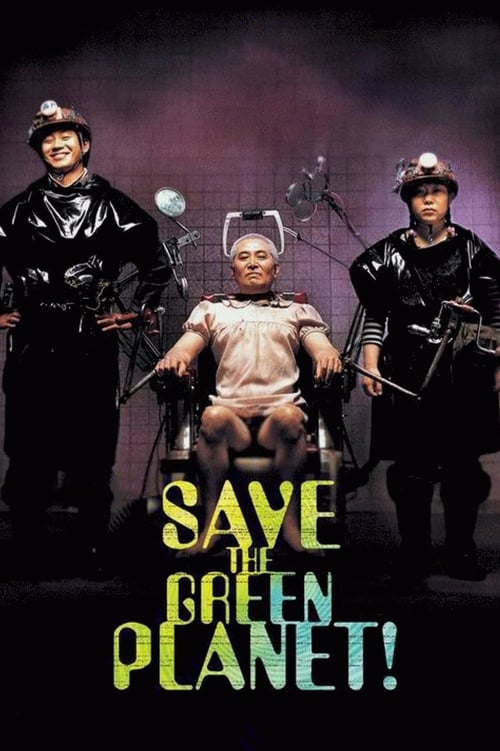
Save the Green Planet!
Plot
A young man believes that his country's leaders are actually toxic reptilian aliens sent down to launch a takeover of his beloved Earth. So he decides to abduct them and force the truth out on camera in his basement that doubles as a film studio and torture chamber.
Get the Weekly Woke Watchlist
New and trending movies scored for woke bias, preachy messaging, and forced political themes — before you waste your evening.
No spam. One useful email per week.
Overall Series Review
Categorical Breakdown
The narrative explicitly critiques the powerful class, specifically the CEO of a large conglomerate, by casting him as the ultimate, literal 'alien' oppressor of the planet. The mentally-unbalanced, downtrodden protagonist is positioned against this corrupt, wealthy, and successful figure, framing the conflict around social injustice, marginalization, and exploitation. The plot uses a fantastical element to vilify the hierarchical system and its leaders.
The film ultimately validates the destruction of Earth by an alien species, explicitly portraying human civilization as fundamentally corrupt and undeserving of continued existence. The alien's judgment is that humanity's ecological and social mistreatment of the planet justifies its eradication. This framing elevates the external, non-human 'other' (the alien) as spiritually and morally superior to the indigenous human civilization, which is cast as fundamentally corrupt and self-destructive.
The core conflict revolves around a male protagonist and his male target (the CEO). The main female character is a sympathetic tightrope walker who acts as a sidekick and assistant to the protagonist’s mission. The narrative does not contain any evidence of the 'Mary Sue' or 'Girl Boss' tropes, nor does it center on anti-natalist or anti-family messaging. Gender dynamics are not a primary focus of the critique.
The plot is entirely focused on a paranoid man's mission to save the planet from alien corporate leaders. There is no presence of alternative sexual ideologies, centering of LGBTQ+ characters, or deconstruction of the nuclear family. The sexual structure is normative by omission, as these themes are not relevant to the movie's plot.
The conflict and its moral basis are rooted in secular concepts of social and environmental justice, or 'ecological imperialism,' rather than theological debate. The film does not feature active hostility toward religion, specifically Christianity, or portray religious figures as villains. Morality is framed as the objective requirement of not destroying the planet, as judged by the alien power.
Get the Weekly Woke Watchlist
New and trending movies scored for woke bias, preachy messaging, and forced political themes — before you waste your evening.
No spam. One useful email per week.