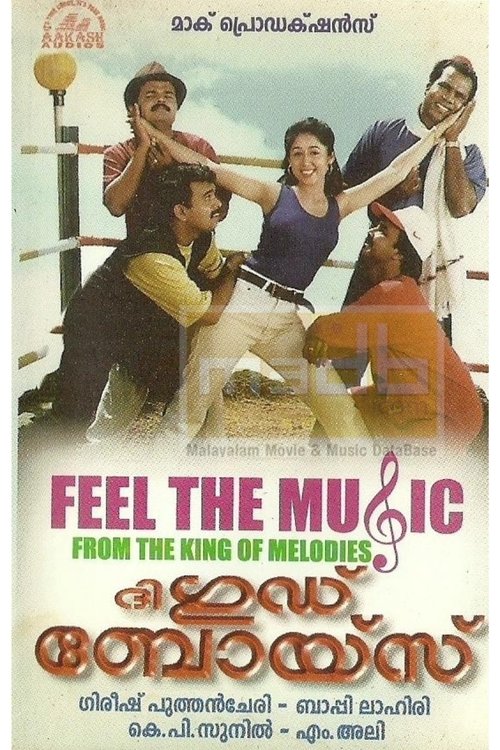
The Good Boys
Plot
Three flirtatious men and their sons get into trouble with a beautiful mentally challenged girl.
Get the Weekly Woke Watchlist
New and trending movies scored for woke bias, preachy messaging, and forced political themes — before you waste your evening.
No spam. One useful email per week.
Overall Series Review
Categorical Breakdown
The narrative’s conflict is driven by male infidelity and youthful recklessness within a single culture, not by intersectional hierarchy or the politics of race. Character flaws like promiscuity and deceit are the source of trouble, aligning with a merit-based morality where characters are judged by their actions, not immutable characteristics.
The movie is an internal critique of moral failings within the cultural setting—specifically, the infidelity of the fathers and the deceit of the sons. Core institutions like the family and traditional religious practice are present. The film does not frame its home culture or ancestry as fundamentally corrupt or racist, and there is no hostility toward Western civilization.
The score is a moderate reflection of the complex gender dynamics. On the one hand, the mothers are described as 'accomplished and empowered housewives' devoted to family, which celebrates motherhood and distinct roles. On the other hand, the male characters’ promiscuity and their objectification of the mentally unstable girl, whom they fantasize to be a prostitute, positions men as bumbling, lustful, or toxic.
The story centers on normative male-female pairing, infidelity, and the nuclear family as a structure to be rebelled against or restored. There is no presence of alternative sexualities, gender ideology, or deconstruction of biological reality, keeping the film firmly in a traditional normative structure.
Religious elements, such as the penance prescribed by an astrologer to purify the fathers, are integral to the plot. Although the men try to shirk this religious duty, the structure of traditional faith and a higher moral law is acknowledged as a source of strength for the wives and a corrective force in society, not as the root of evil or bigotry.
Get the Weekly Woke Watchlist
New and trending movies scored for woke bias, preachy messaging, and forced political themes — before you waste your evening.
No spam. One useful email per week.