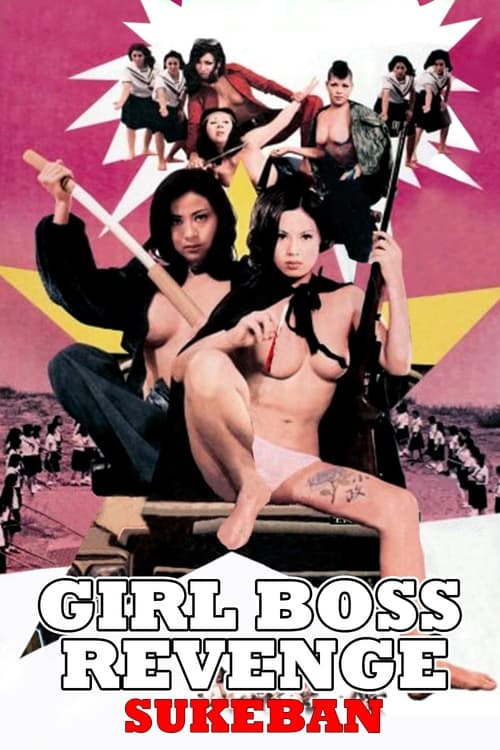
Girl Boss Revenge: Sukeban
Plot
The Kanto Gypsies, a tough girl gang, hide out from the law in the middle of a disputed gang territory, where they end up getting kidnapped by sinister underworld thugs. After breaking free, the girls set their sights on one thing: revenge. Miki Sugimoto stars as girl boss Komasa, the ruthless and sadistic leader of the Kanto Gypsies who possesses more than enough brains to match her killer looks.
Get the Weekly Woke Watchlist
New and trending movies scored for woke bias, preachy messaging, and forced political themes — before you waste your evening.
No spam. One useful email per week.
Overall Series Review
Categorical Breakdown
The film operates within a purely Japanese context, and the conflict revolves around gang rivalry, revenge, and power dynamics, not race or intersectional hierarchy. Characters are judged entirely on their criminal merit, exemplified by Komasa being a 'ruthless and sadistic leader' who earns her status. The casting is historically and culturally authentic to the genre and setting.
The film's setting in the yakuza-controlled underworld of Osaka presents a world of crime, betrayal, and money-hungry degenerates. The critique is directed at the explicit corruption of the criminal element and the failures of law enforcement (evidenced by the girls escaping a prison transport). It does not engage in hostility toward core Japanese civilizational values, nation, or ancestors, but focuses on the anti-establishment nature of the juvenile delinquency subculture.
The core premise is a pure 'Girl Boss' trope, where Komasa is a flawless, ultra-competent, and powerful leader. Men are overwhelmingly depicted as 'sinister underworld thugs' or disloyal figures, serving as disposable villains for the girls' revenge. The narrative explicitly focuses on female agency, violence, and leadership in a traditionally male domain (the gang underworld). Motherhood and family are absent from the narrative, replaced by criminal career and vengeance as the only fulfillment.
The film is a 1973 exploitation feature, and the conflict largely centers on traditional male-female power struggles, sexual violence, and exploitation tropes common to the 'pinky violence' genre. There is no presence of modern sexual ideology, deconstruction of the nuclear family as a political concept, or focus on gender theory. Traditional male-female pairing and conflict are the standard structure, even in a criminal context.
The narrative operates in a completely secular underworld environment focused on crime and vengeance. Traditional religion is neither a source of strength nor a target of hostility. Morality is fundamentally subjective within the lawless world of the delinquent gangs and yakuza, prioritizing 'power dynamics' and brutal retribution over any objective or transcendent moral law. The absence of spiritual themes places the score in the neutral range.
Get the Weekly Woke Watchlist
New and trending movies scored for woke bias, preachy messaging, and forced political themes — before you waste your evening.
No spam. One useful email per week.