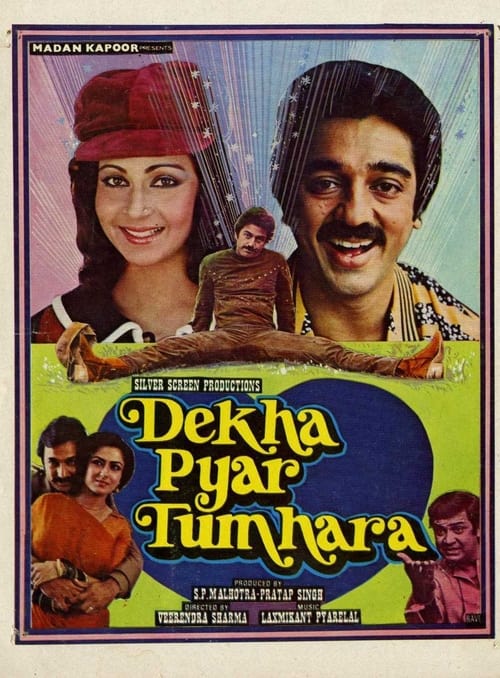
Dekha Pyar Tumhara
Plot
Anu, a rich girl, falls in love with Vishal, a photographer, and marries him. However, soon after the wedding, Anu begins suspecting her husband of having an extra-marital affair.
Get the Weekly Woke Watchlist
New and trending movies scored for woke bias, preachy messaging, and forced political themes — before you waste your evening.
No spam. One useful email per week.
Overall Series Review
Categorical Breakdown
The central conflict revolves around class differences—a rich girl marrying a middle-class photographer—which is a common dramatic trope, but there is no evidence of race-based or intersectional lecturing. Character judgment is based on personal actions, fidelity, and marital dynamics, not immutable characteristics or vilification based on a hierarchy of 'whiteness' or other modern identity categories. The casting is historically and culturally appropriate for a 1980s Indian film.
The film is an Indian production focusing entirely on a domestic, Bombay-based marital drama. There is no critique, demonization, or hostility directed at Western civilization, Indian culture, or ancestral values. The narrative's focus is on personal behavior and the sanctity of the family unit, which positions it as an examination of internal, personal conflicts within a normative cultural structure, not a rejection of it.
The score is elevated due to the plot point where the female lead, Anu, actively works to 'train' her husband to become 'hen-pecked,' seeking total dominance and control within the marriage. This directly aligns with the 'emasculation of males' criteria. However, the film is not a 10/10 because Anu is not a 'perfect instantly' Mary Sue; her plan causes misery for both, and the ending requires mutual reconciliation, suggesting a final return to a complementary or balanced marital ideal rather than a celebration of the 'Girl Boss' dominance.
The narrative is strictly focused on the traditional, heterosexual marital relationship between Anu and Vishal. The conflict centers on a suspicion of a conventional, extramarital affair. There is no presence of alternative sexual ideologies, deconstruction of the nuclear family structure, or inclusion of gender theory lecturing.
The plot is a social and romantic drama dealing with marital issues and jealousy. There are no religious characters presented as villains or bigots, and no discernible hostility toward traditional religion or faith. The conflict and resolution are based on conventional moral standards of fidelity, suggesting an acknowledgment of objective moral truth regarding spousal commitment rather than an embrace of moral relativism.
Get the Weekly Woke Watchlist
New and trending movies scored for woke bias, preachy messaging, and forced political themes — before you waste your evening.
No spam. One useful email per week.