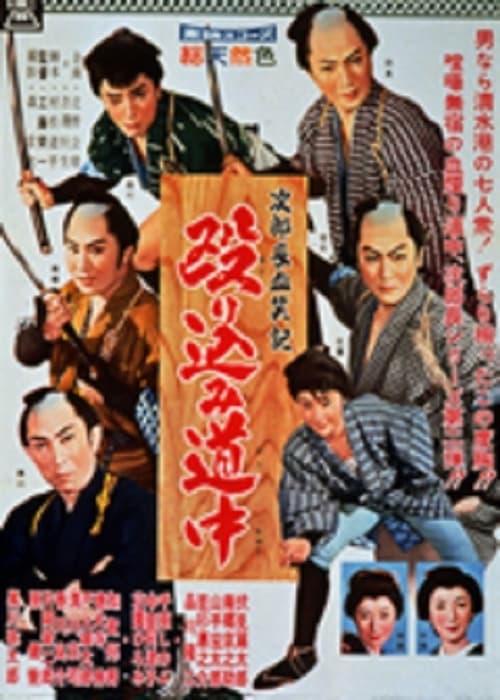
Bloody Account of Jirocho: Raid on the Road
Plot
Get the Weekly Woke Watchlist
New and trending movies scored for woke bias, preachy messaging, and forced political themes — before you waste your evening.
No spam. One useful email per week.
Overall Series Review
Categorical Breakdown
The film is set in 19th-century Japan and features Japanese characters, making concepts of 'whiteness' or 'race-swapping' irrelevant. Characters are judged by their loyalty, courage, and adherence to the yakuza's code of honor. Merit, though criminal in nature, is universal within the narrative's moral framework. The casting is historically and culturally authentic.
The movie is a celebration of a specific, romanticized aspect of Japanese history and folk legend. It focuses on the traditional Japanese values of a legendary yakuza figure and his comrades. The narrative is built on respect for the cultural heritage and institutions (like the yakuza gang structure, viewed as a family) of the era, showing gratitude for the nation’s folk heroes.
The core story centers on male yakuza figures, reinforcing traditional gender roles where men are the primary actors in the world of violence and honor. While a specific side character is a clever female pickpocket who comically outwits a male gangster, this does not constitute a 'Girl Boss' trope. The presence of tricky or strong women is an element of complementary distinction, not an argument for male emasculation or anti-natalism.
The genre and historical setting of a 1960 jidai-geki about 19th-century yakuza ensure the plot focuses on normative male-female pairing and traditional societal structures. There is no presence of alternative sexual identities, queer theory, or gender ideology, and sexuality remains private and not a central focus of character definition.
The narrative operates within a framework of clear moral principles: the yakuza code of honor, loyalty, and duty, which acts as a transcendent moral law for the characters. While the focus is on a secular code of honor rather than a specific religion, this is an objective moral structure. There is no hostility toward traditional spiritual or religious institutions.
Get the Weekly Woke Watchlist
New and trending movies scored for woke bias, preachy messaging, and forced political themes — before you waste your evening.
No spam. One useful email per week.