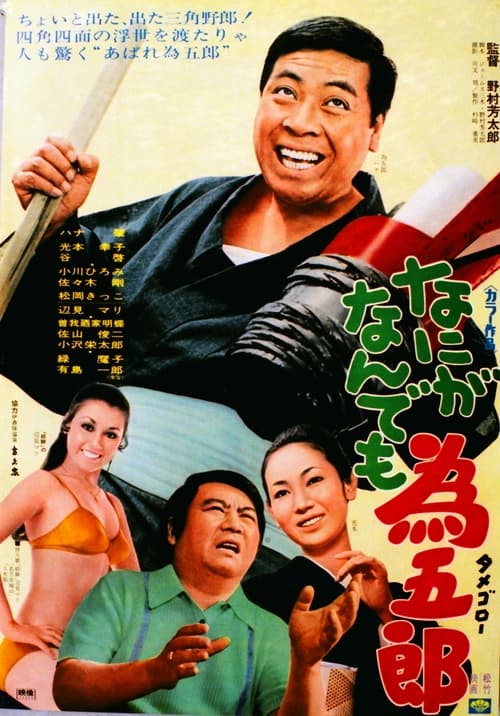
Nani ga nandemo Tamegorō
Plot
Get the Weekly Woke Watchlist
New and trending movies scored for woke bias, preachy messaging, and forced political themes — before you waste your evening.
No spam. One useful email per week.
Overall Series Review
Categorical Breakdown
The narrative is centered on a conflict between adherence to a traditional criminal code (yakuza honor) and modern, cynical business practices. Characters are judged solely by their loyalty, greed, and individual actions, embodying a form of universal meritocracy tied to the yakuza code. There is no reliance on race or intersectional hierarchy; the cast and setting are entirely and authentically Japanese.
The film criticizes the internal shift in Japanese society from the traditional code of honor and loyalty to materialistic corporate greed. The antagonist is modernization and internal corruption, not Western civilization. The protagonist’s mission is to defend core Japanese institutions (loyalty, the traditional family inn structure) against chaos, indicating a respect for a specific ancestral code.
Female characters primarily occupy traditional roles. Chiyo is an apprentice geisha turned *okami* (mistress) of the inn and the wife of the protagonist's brother. Her role is central to the drama but is rooted in domestic and local business concerns. The story features no anti-natalist messaging. The male lead is a protective, self-sacrificing figure, and the gender dynamics reflect complementary traditional roles within the yakuza and family structures.
The core relational drama revolves around a traditional male-female pairing and a love triangle involving the protagonist, his former fiancée, and his sworn brother. The film’s focus is on the honor code and property disputes. The narrative contains no elements of deconstructing the nuclear family, alternative sexualities, or lecturing on gender theory. The structure is normative for the period and setting.
The movie's moral foundation is the yakuza code of honor and duty (*jingi*), which acts as a transcendent moral law in opposition to the moral relativism and corruption of the modern businessman and politician. The conflict is secular, focused on a breakdown of social values rather than religious belief. There is no hostility toward religion.
Get the Weekly Woke Watchlist
New and trending movies scored for woke bias, preachy messaging, and forced political themes — before you waste your evening.
No spam. One useful email per week.