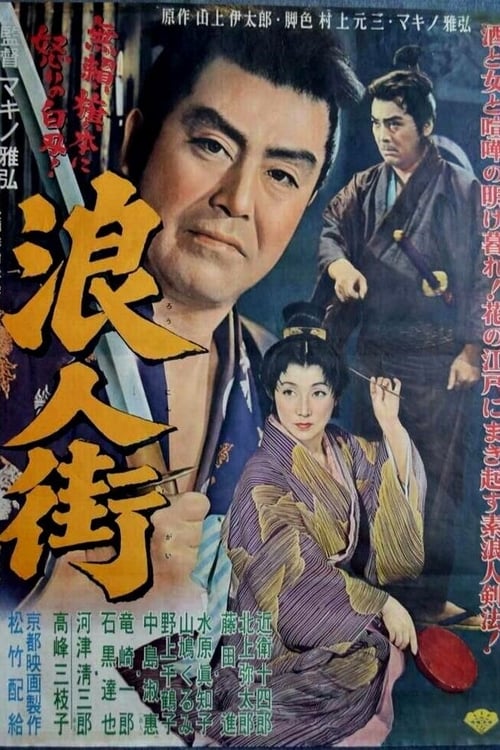
Street of Ronin
Plot
Based on the famous novel by Yamagami Itaro, this is the story of a group of ronin living in abject poverty in the latter days of the Edo period. Starring the great Konoe Jushiro, Ronin Gai is populated by an ensemble of colorful characters, social outcasts who patronize a restaurant and bar on the outskirts of Edo. Among them are masterless samurai reduced to drunkenness and debauchery. One disgraced and disillusioned former warrior gets a chance at redemption when he is hired to retrieve a famous knife from a corrupt lord. This is the third version directed by Makino Masahiro and is considered a true classic.
Get the Weekly Woke Watchlist
New and trending movies scored for woke bias, preachy messaging, and forced political themes — before you waste your evening.
No spam. One useful email per week.
Overall Series Review
Categorical Breakdown
The conflict is class-based, contrasting the impoverished, morally-driven ronin and townsfolk with the corrupt, wealthy, and cruel samurai elite (hatamoto). Characters are judged by their personal moral conduct and capacity for honor, not by immutable characteristics or racial identity. The casting is historically authentic to the Edo-period Japanese setting, and the concept of vilifying "whiteness" is not applicable to this non-Western film.
The movie is a critique of the corruption within the feudal structure of the late Edo period, which is a specific, historically antithetical political system within Japan, not Western civilization. The core Japanese institutions of family and honor (even among the fallen ronin) are depicted as shields against the chaos and corruption of the government elite. The film does not exhibit self-hatred toward its own culture; rather, it champions the moral code of the good outcasts against the bad actors in power.
Women, many of whom are prostitutes or outcasts, are victims of the corrupt elite and serve as the impetus for the ronin’s climactic act of protective violence. While the women are portrayed with sensitivity and are key to the emotional stakes, they are not "Girl Boss" figures who save themselves. The narrative is driven by men demonstrating traditional, protective masculinity, which contrasts with the anti-male tropes of modern feminism. The roles reflect a clear complementarian dynamic.
The film focuses on traditional male-female pairings and friendships within the context of the outcast community. The storyline features romantic love and male camaraderie without any exploration, centering, or lecturing on alternative sexualities, gender ideology, or deconstruction of the nuclear family. The presentation of sexuality is discreet and normative for a film of its period and genre.
The film is secular in its morality, focused on a code of honor, justice, and redemption. The core evil is the corruption of the feudal power structure and the cruelty of the elite, not religious faith. The ronin’s final act is one of transcendent moral action, upholding a higher law of justice against corruption, which directly opposes moral relativism. Hostility toward Christianity is not a theme, as the film is set in a non-Christian society.
Get the Weekly Woke Watchlist
New and trending movies scored for woke bias, preachy messaging, and forced political themes — before you waste your evening.
No spam. One useful email per week.