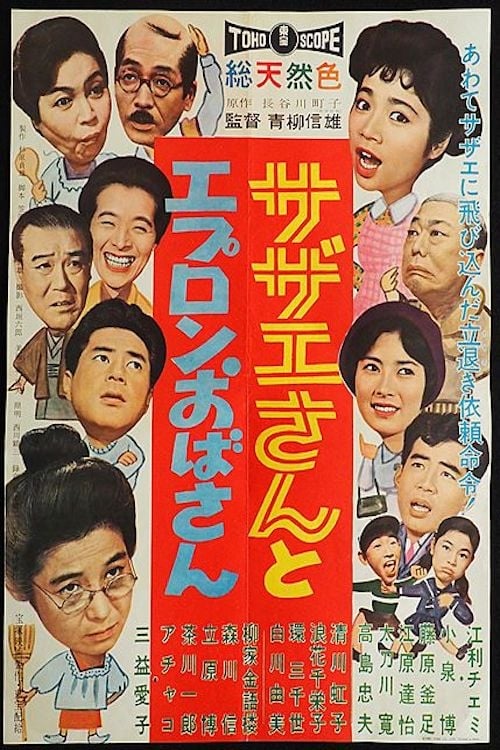
Sazae And Aunt Apron
Plot
An adaptation of the popular Sazae-san comic strip
Get the Weekly Woke Watchlist
New and trending movies scored for woke bias, preachy messaging, and forced political themes — before you waste your evening.
No spam. One useful email per week.
Overall Series Review
Categorical Breakdown
The entire cast is Japanese, authentically reflecting the setting of post-war Tokyo. The conflict is based on domestic issues and generational differences, not on race, immutable characteristics, or intersectional hierarchy. Characters are defined by their family roles and personal eccentricities within a colorblind (within its own context) focus on the content of their character.
The plot's focus is the celebration and affectionate critique of contemporary Japanese life. While it pokes fun at older customs and the traditional patriarchy of the time, the series has become a nostalgic representation of Japanese society and family life. The narrative views the core Japanese family and community as a shield against chaos, not as fundamentally corrupt or evil.
Sazae is explicitly described as a 'liberated woman' and a 'feminist' who is involved in a 'women’s lib group.' The narrative openly portrays her 'bossing around her husband,' which is met with the consternation of neighbors who favor traditional male authority. This pushes the score high toward the 'Girl Boss' trope. However, the entire premise remains dedicated to the 'large family dynamic' and homemaking, with a final message about finding happiness in simple family life, preventing a full 10/10 for anti-natalism.
The story centers exclusively on the normative structure of the extended, heterosexual nuclear family. There is no presence of alternative sexualities, gender ideology, or deconstruction of the male-female pairing. Sexuality is private and implicit within the family context.
The narrative is purely secular and focuses on the mundane, slice-of-life events of a post-war family, avoiding spiritual or religious themes. It does not display any direct hostility toward religion (Christianity or otherwise), nor does it preach moral relativism. The focus on objective concepts like family, community, and 'the little things' in life suggests an inherent, positive moral structure, placing it in the middle for a lack of a clear anti-theistic message.
Get the Weekly Woke Watchlist
New and trending movies scored for woke bias, preachy messaging, and forced political themes — before you waste your evening.
No spam. One useful email per week.