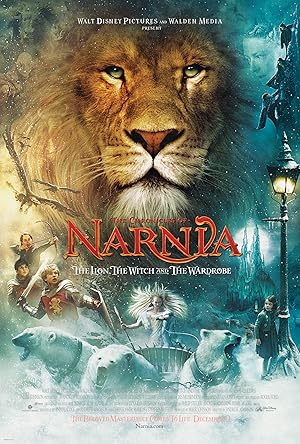
The Chronicles of Narnia: The Lion, the Witch and the Wardrobe
Plot
Four children from the same family have to leave their town because of the bombings of WWII. A woman and a professor take the children to their house. While playing a game of hide-and-seek, the youngest member of the family, Lucy, finds a wardrobe to hide in. She travels back and back into the wardrobe and finds a place named Narnia. After going in twice, the four children go in together for the last time. They battle wolves, meet talking animals, encounter an evil white witch and meet a magnificent lion named Aslan. Will this be the end of their journey to Narnia or will they stay?
Get the Weekly Woke Watchlist
New and trending movies scored for woke bias, preachy messaging, and forced political themes — before you waste your evening.
No spam. One useful email per week.
Overall Series Review
Categorical Breakdown
Characters are judged solely by their actions and moral development, such as Edmund's redemption from betrayal and Peter's growth into a noble leader. The narrative is focused entirely on a universal moral and spiritual conflict, with no reliance on race, intersectional hierarchy, or vilification of the main characters' English heritage. Casting is entirely consistent with the 1940s wartime England setting and the original source material.
The story begins by framing the children's English home and family unit as a necessary sanctuary against the chaos of World War II. Narnia itself is depicted as a beautiful, ancient civilization blighted by tyranny, and the children's quest is to restore its traditional, rightful order and break the evil winter, celebrating its long-lost heritage and institutions. There is no hostility toward Western civilization or ancestors.
The Pevensie siblings are assigned distinct, traditional, yet complementary roles. Peter is established as the High King and military leader, while Susan is designated as Queen the Gentle, equipped with a defensive bow and horn, and Lucy as Queen the Valiant, given a healing cordial. All four children's contributions are vital, but their roles follow distinct masculine (warrior/authority) and feminine (support/healing/compassion) archetypes. There is no 'Girl Boss' trope or anti-natal message, as the characters are children.
The core of the human element revolves around a traditional nuclear sibling unit. The film's themes are entirely focused on moral virtue, courage, and spiritual allegory. There is no content centering on alternative sexualities, deconstruction of the male-female pairing, or commentary on gender ideology. The structure remains entirely normative.
The core plot is a direct and widely acknowledged Christian allegory. The magnificent lion Aslan explicitly serves as a Christ-figure who voluntarily sacrifices himself for the redemption of the betrayer, Edmund, and is subsequently resurrected. The narrative's entire moral framework is built upon objective, transcendent moral law (the Deep Magic) and the necessity of faith, sacrifice, and ultimate good over evil.
Get the Weekly Woke Watchlist
New and trending movies scored for woke bias, preachy messaging, and forced political themes — before you waste your evening.
No spam. One useful email per week.