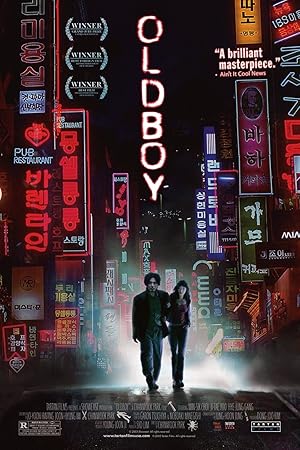
Oldboy
Plot
Abducted on a rainy night in 1988, the obnoxious drunk, Oh Dae-Su, much to his surprise, wakes up locked in a windowless and dilapidated hotel room, for an unknown reason. There, his invisible and pitiless captors will feed him, clothe him, and sedate him to avert a desperate suicide--and as his only companion and a window to the world is the TV in his stark cell--the only thing that helps Oh Dae-Su keep going is his daily journal. Then, unexpectedly, after fifteen long years in captivity, the perplexed prisoner is deliberately released, encouraged to track down his tormentor to finally get his retribution. However, who would hate Oh Dae-Su so much he would deny him of a quick and clean death?
Get the Weekly Woke Watchlist
New and trending movies scored for woke bias, preachy messaging, and forced political themes — before you waste your evening.
No spam. One useful email per week.
Overall Series Review
Categorical Breakdown
The film is a South Korean production with a Korean cast and setting, focusing on a personal vendetta between two men from similar backgrounds. The plot's conflict relies on a man's past personal actions, secrets, and an obsession with revenge, not on race, class, or any intersectional hierarchy. Character merit and fault are judged on individual moral failings.
The movie is an internal critique of South Korean society, exposing a 'dark underbelly' and the consequences of trauma or suffering within its culture. It does not display a generalized 'Hostility toward Western civilization' or promote the 'Noble Savage' trope. The critique is specific to the modern country's veneer, which places it slightly above a perfect 1/10 score, but it is not a broad, civilizational self-hatred.
Female characters, such as Mi-do, are consistently depicted as lacking agency, autonomy, or critical thought. One character is easily manipulated by hypnosis, making her a tool in a man's revenge plot. The narrative is criticized for having troubling sexual dynamics and suggesting that the male protagonist 'deserves sex' after his imprisonment. This representation is the direct opposite of the 'Girl Boss' or perfect female lead trope, causing the film to score very low on the 'woke' scale.
The primary relationship and the plot's central tragic element revolve around a heterosexual pairing and a sexual taboo (incest). The story does not feature or center alternative sexualities, nor does it engage in lecturing on gender theory, or deconstructing the nuclear family in a modern, political sense. The structure is normative, with the core deviance being an extreme form of Oedipal tragedy.
The core thematic analysis of the film centers on the denial of 'capital T-truth,' suggesting that morality is a subjective, 'lived-out and experiential personal truth' rather than a foundational or transcendent moral law. The narrative questions the possibility of redemption and focuses on human depravity without offering a clear moral protagonist, strongly embracing moral relativism and a spiritual vacuum.
Get the Weekly Woke Watchlist
New and trending movies scored for woke bias, preachy messaging, and forced political themes — before you waste your evening.
No spam. One useful email per week.