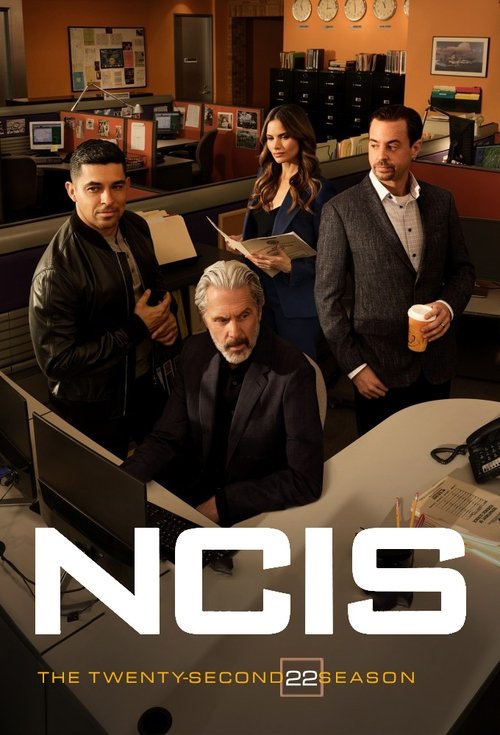
NCIS
Season 22 Analysis
Season Overview
No specific overview for this season.
Season Review
Categorical Breakdown
The main cast features a diverse representation, including a Black director, a Black forensic specialist, and lead agents who are Hispanic and Asian, making meritocracy secondary to a visible quota in casting. A major storyline places White male agent McGee in conflict with a White male deputy director whom he wrongly suspects of being a corrupt mole, setting up a White male-as-antagonist archetype. However, the narrative resolves the conflict by clearing the deputy director, preventing a 10/10 score.
The series remains centered around a military law enforcement agency, preventing a high score. However, one key plot involves a former military man (Sam Hanna) who is working to protect 'democracy' on Capitol Hill and helping expose a private military company that is exploiting veterans to protect 'warlords and other bad guys.' This frames a portion of the Western military-industrial complex as fundamentally corrupt. Another episode questions the heroism of a veteran advocate, introducing a deconstructive element toward American institutional figures.
Special Agent Jessica Knight (Asian Female) and Forensic Specialist Kasie Hines (Black Female) are consistently portrayed as highly competent, strong professionals. Knight's professional status is confirmed by her highly-coveted chief training officer offer. Male leads, particularly Dr. Palmer, are often defined by their emotional turmoil over relationship issues with the female characters. The narrative focuses on the career path and relationship drama of the female agent, though her character is sometimes depicted as immature in personal relationships by a review, slightly countering the perfect 'Girl Boss' trope.
The season's plot summaries reveal no instances of the narrative focusing on, celebrating, or lecturing about alternative sexualities or gender identity ideology. The main romantic arcs, including Torres' secret romance and the Knight/Palmer relationship, are heterosexual and normative in structure.
No explicit or implicit anti-theism appears in the primary plot details. The show functions within a standard procedural framework that assumes a transcendent moral law where actions have objective consequences (crime and justice), offering a neutral-to-positive stance toward objective truth.